 ultimate-guide
Advanced Obedience Training for Dogs: 2026 Guide
Table of Contents
- What Advanced Obedience Training for Dogs Actually Means
- Building Off-Leash Dog Training Reliability
- Advanced Dog Training Equipment That Supports the Work
- Professional Dog Training Duration and What to Expect
Last Updated: August 26, 2026
What Advanced Obedience Training for Dogs Actually Means
Advanced obedience training is the next level of behavioral development beyond basic commands, where dogs learn to respond reliably under real-world pressure, at a distance, and without a leash. A dog that sits on command in your kitchen is not the same dog that holds a stay while a squirrel sprints past at the park.
Advanced obedience builds on foundational commands to achieve off-leash reliability, precision heel work, extended duration stays, distance commands, and consistent recall even with competing distractions. According to Dog Training Services Market Growth, Size & Industry Outlook 2035, around 61% of dog owners seek professional training specifically for obedience correction.
The real benchmark for advanced work is what trainers call the three D's: duration, distance, and distraction. A dog that can hold a place command for several minutes, respond to hand signals from across a field, and execute an emergency stop mid-run has reached mastery that makes daily life genuinely different.
Building Off-Leash Dog Training Reliability
Off-leash reliability is the most sought-after outcome in advanced training, and the hardest to achieve without a structured, consistent approach.
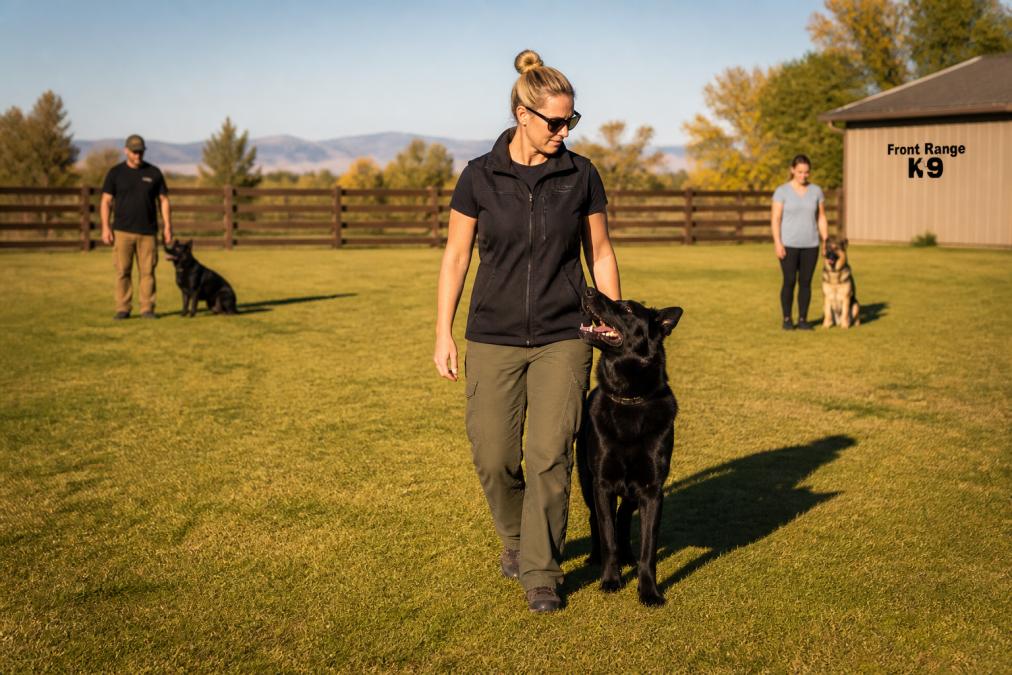
Building off-leash reliability depends on distraction proofing: systematically exposing a dog to increasingly challenging environments while maintaining behavioral standards. This deliberate progression moves from controlled indoor settings to outdoor spaces with real-world variables, other dogs, unfamiliar people, moving vehicles, and wildlife. For dogs with specific environmental concerns, such as exposure to wildlife hazards, specialized programs like snake avoidance dog training address safety in high-risk environments while building the same reliable obedience foundation.
Impulse control is the foundation of this work. Research from Cornerstone K9's advanced training analysis found that dogs with strong impulse control achieve a 70% success rate in advanced training sessions compared to dogs with lower impulse control.
Verbal commands and hand signals both play a role in advanced off-leash work. Dogs that respond to hand signals alone can be directed silently at a distance, a critical skill for competition readiness and everyday safety. The adolescent dog stage, roughly 6 to 18 months depending on breed, is often where off-leash reliability breaks down due to hormonal changes and increased environmental pull.
"No matter what the breed, all dogs need structure and consistent training." -- Victoria Stilwell, Dog Trainer and Author at Victoria Stilwell Positively (Embroly, 2025)
Advanced Dog Training Equipment That Supports the Work
The right equipment does not replace training, but the wrong equipment can actively slow it down. Long lines (typically 15 to 30 feet) are standard tools for building off-leash reliability while maintaining a safety connection. A structured collar or working harness chosen to match the dog's size and temperament gives the handler clear, consistent communication during heel work and recall exercises. stop leash pulling.
Book your Temperament Test & Training Session →
| Equipment | Primary Use | Advanced Application |
|---|---|---|
| Long line (15-30 ft) | Distance recall building | Environmental conditioning off-leash |
| Working collar | Handler communication | Precision heel work and corrections |
| Structured harness | Body control | Sport and competition prep |
| Reward marker | Behavioral reinforcement | Shaping complex behavioral cues |
Professional Dog Training Duration and What to Expect
Most owners want a clear answer: how long does advanced obedience training take? The honest answer is that it depends on the dog's age, temperament, prior training history, and the handler's consistency between sessions.
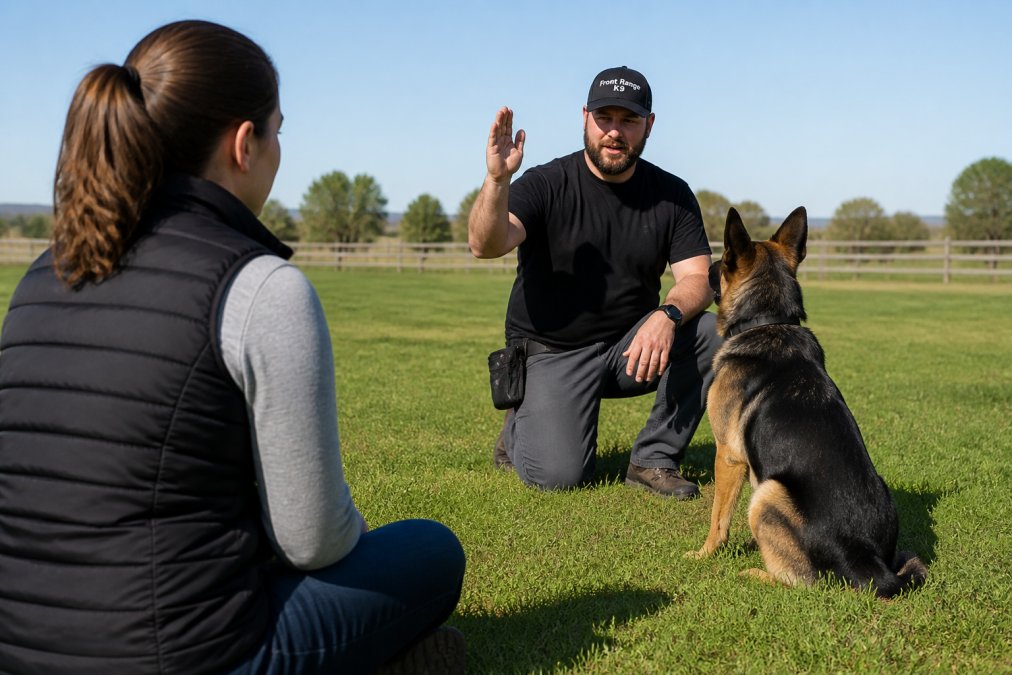
Dogs completing a solid basic obedience foundation typically need several months of structured advanced work to achieve reliable off-leash control and precision obedience standards. A young adult dog between 18 months and 3 years is typically at peak trainability for advanced work. Older dogs absolutely can progress; the idea that an older dog cannot learn new behaviors is a myth.
What owners should realistically expect: an initial assessment of the dog's current skill level and temperament, a structured progression through duration, distance, and distraction challenges, handler education so owners can maintain and build on skills at home, and regular progress benchmarks to confirm the dog is generalizing commands across environments.
Contact Front Range K9 Academy directly for current program details and to find the right fit for your dog's needs.
Advanced obedience training is where the real transformation happens, for the dog and the owner. If your dog is stuck between "mostly good" and genuinely reliable, a structured program built on proven methods makes all the difference. Front Range K9 Academy has trained more than 10,000 dogs and owners using proven methods that deliver real-world results. Book your Temperament Test and Training Session to find out exactly where your dog is and what it takes to get where you want to go.
Frequently Asked Questions
What is considered advanced obedience training for dogs?
Advanced obedience training builds on foundational commands by introducing off-leash reliability, distance commands, hand signals, extended duration stays, and precision heel work under high-distraction environments. Where basic training establishes that a dog knows a command, advanced obedience training for dogs proves the dog will perform that command reliably anywhere, regardless of competing stimuli. Dogs with strong impulse control show a 70% higher success rate in advanced training sessions compared to those without it, according to industry data.
How does advanced obedience differ from basic training?
Basic training teaches a dog to respond to commands in a controlled, low-distraction setting. Advanced obedience raises the standard by requiring the same responses at a distance, during extended stays, off-leash, and amid real-world distractions like traffic, other dogs, or crowds. It also introduces precision skills such as formal heel work, emergency stops, and handler-focus under pressure. Around 63% of dog owners in the US invest in structured training programs, and advanced work represents the higher tier of that commitment.
Is a 7-year-old dog still trainable for advanced obedience?
Yes. Dogs of any age can progress through advanced obedience training, including older adults. The timeline may differ from a younger dog's, and some physical limitations require adjustment, but the capacity to learn new behavioral cues does not disappear with age. Consistency and a structured approach matter far more than age. Professional trainers with experience across all life stages can tailor programs to match where your dog is right now, rather than where you wish it had started.
This article was written using GrandRanker