 how-to
Can You Train an Adult Dog? Yes—Here's How
Table of Contents
- Can You Train an Adult Dog? The Short Answer
- How Long to Train an Adult Dog and What to Expect
- Adult Dog Training Challenges and How to Overcome Them
- Benefits of Professional Dog Training for Older Dogs
- Frequently Asked Questions
Last Updated: August 31, 2026
Can You Train an Adult Dog? The Short Answer
Yes, you absolutely can train an adult dog. The idea that dogs can only learn when they're puppies is a myth. According to research on adult dog learning from Tip Top K9, adult dogs are capable of learning new behaviors and adapting to new training regimes with consistent reinforcement, regardless of their age.
Adult dogs often have advantages puppies don't: longer attention spans, better impulse control, and an existing understanding of how human communication works. If your dog already knows "sit," they've grasped the cue-reward system, making teaching new commands faster than starting from scratch.
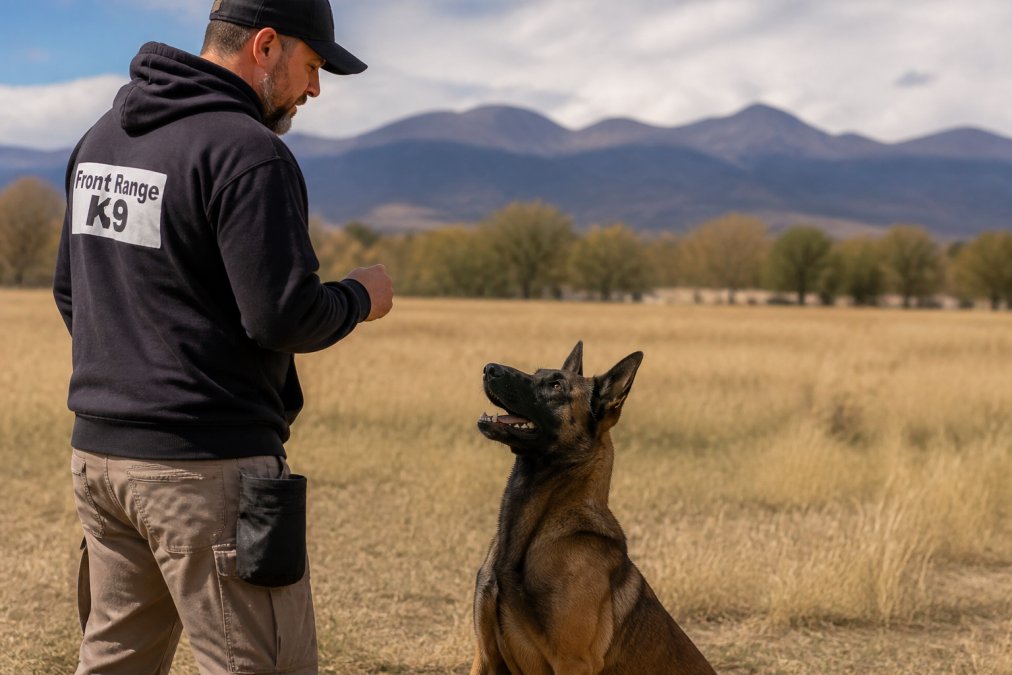
At Front Range K9 Academy, we've worked with thousands of dogs across all ages and backgrounds. Age is rarely the limiting factor. Inconsistency, unclear expectations, and mismatched methods derail adult dog training, all fixable problems.
How Long to Train an Adult Dog and What to Expect
Training timelines depend on your goals. Basic obedience typically shows progress within 4-6 weeks of consistent training, while behavior modification for long-standing issues like pulling or reactivity may take 8-12 weeks or longer depending on severity.
Regular practice at home is crucial. Dogs trained in 3-5 minute intervals showed significantly more retention and enthusiasm compared to longer sessions, especially important for adult dogs who benefit from shorter, focused interactions.
Progress looks different for an adult dog than for a puppy. You won't see dramatic overnight changes, but subtle shifts: your dog checking in with you more on walks, responding faster to commands, or showing less anxiety in previously stressful situations.
Adult Dog Training Challenges and How to Overcome Them
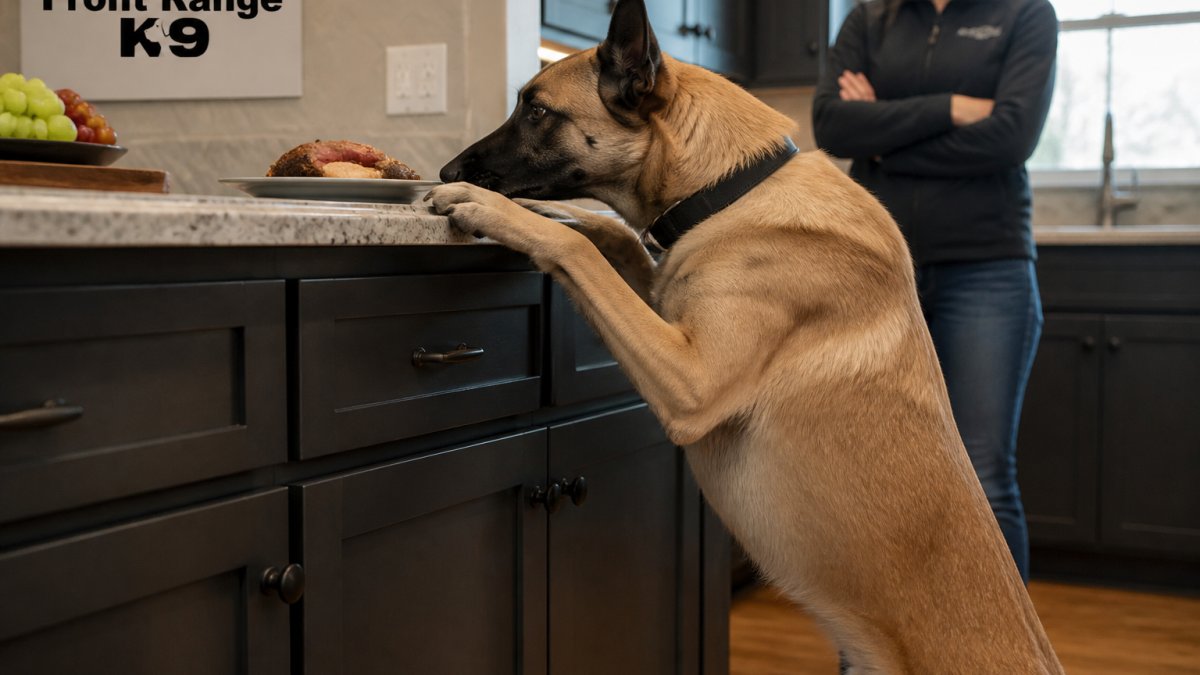
The biggest challenge with adult dogs isn't their age, it's breaking established patterns. A dog who has spent years pulling on the leash has practiced that behavior thousands of times. Your job is to make not pulling more rewarding than pulling.
Older dogs sometimes struggle with focus if they've never been trained before. They may have developed anxiety or reactivity in response to situations they didn't understand. Another real challenge is owner consistency. Adult dogs are remarkably sensitive to inconsistency. If pulling gets ignored one day and corrected the next, your dog doesn't understand the rule. This is why professional training works better than DIY attempts for many owners.
Mental stimulation becomes increasingly important for senior dogs. According to research on cognitive function in aging dogs, continuing to teach an adult dog is beneficial for their long-term health, as mental exercise is crucial for staving off cognitive decline. Actively learning new skills keeps their brain's neural pathways active and healthy, which can help prevent Canine Cognitive Dysfunction.
| Challenge | Why It Happens | How to Address It |
|---|---|---|
| Pulling on leash | Years of practice; no clear alternative | Consistent structure; clear expectations |
| Reactivity | Anxiety or learned response | Professional assessment; behavior modification |
| Lack of focus | Never trained; older dogs tire faster | Shorter sessions; high-value engagement |
| Established habits | Long reinforcement history | Patience; breaking patterns takes time |
Benefits of Professional Dog Training for Older Dogs
Professional training accelerates results because trainers bring consistency, expertise, and accountability. A professional trainer assesses your dog's temperament, identifies what's driving unwanted behaviors, and creates a structured plan tailored to your dog's age and history. They also teach you how to maintain progress at home, critical because training only sticks if you reinforce it consistently between sessions.
Book your Temperament Test & Training Session →
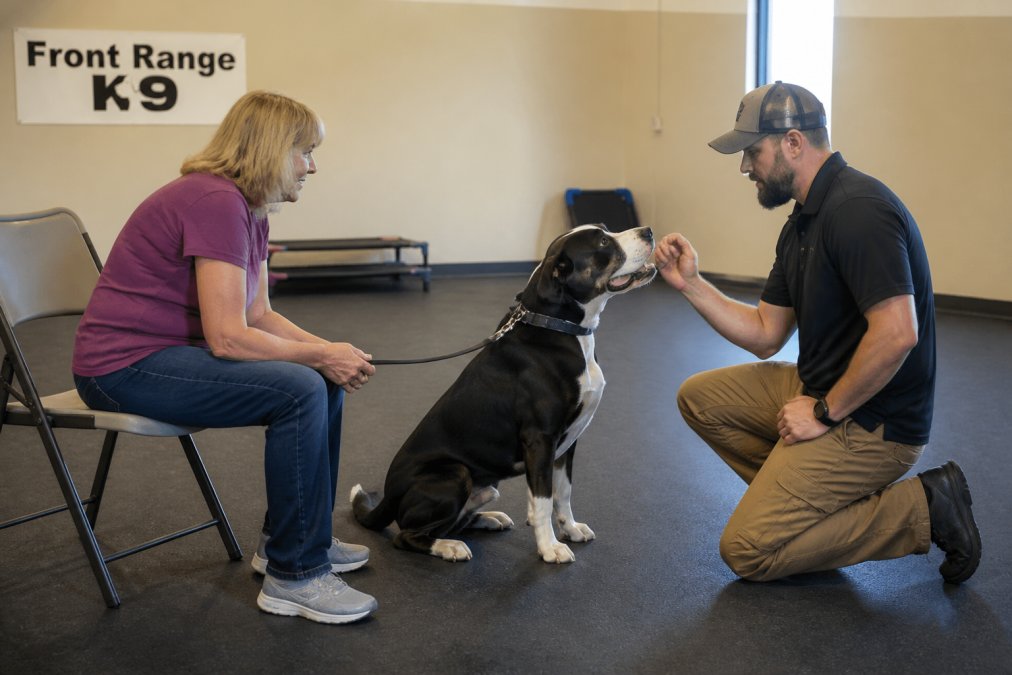
For adult dogs with serious behavioral challenges, aggression, severe reactivity, or deep-rooted anxiety, professional guidance is essential. These issues require expertise to diagnose correctly and address safely. The other benefit is peace of mind. Knowing that a certified professional has evaluated your dog and created a plan reduces stress and guesswork.
Specialized training needs also benefit from professional expertise. For example, if you live in an area with wildlife hazards, snake avoidance dog training teaches adult dogs to recognize and avoid snakes, a skill that can prevent serious injury and is best handled by trainers experienced in this specific type of behavioral conditioning.
Your adult dog can absolutely learn new behaviors, break old habits, and become the companion you want. Age isn't the barrier. The right approach, consistency, and patience are what make the difference. If you've tried training on your own without success, professional guidance can unlock progress you thought was impossible. Front Range K9 Academy has spent 36+ years helping dogs and owners achieve lasting results, whether your dog is 2 years old or 10. Book your Temperament Test & Training Session to discover what's possible for your dog.
=== FAQ ANSWERS (audit these too, same rules) ===
[1] Q: Is it harder to train an adult dog compared to a puppy? A: No, in fact, adult dogs often have advantages. They typically have longer attention spans, better impulse control, and already understand how humans communicate. If your adult dog knows basic commands, they grasp the cue-reward system, making it faster to teach new behaviors than starting from scratch with a puppy. The challenge isn't age; it's using methods tailored to mature dogs rather than puppy-focused approaches.
[2] Q: How long does it take to see results when training an adult dog? A: Basic obedience training typically shows progress within 4-6 weeks of consistent practice, while behavior modification for deeper issues may take 8-12 weeks or longer depending on severity. Short, focused training sessions (3-5 minutes) show significantly better retention and enthusiasm than longer sessions. Regular practice at home is crucial for accelerating results and building lasting behavioral change.
[3] Q: Can a 7-year-old dog learn new behaviors? A: Absolutely. Studies have shown that older dogs, although it may take them longer than younger dogs or puppies, are capable of learning new things and can be trained to change their behavior. Older dogs can focus longer than puppies and often enjoy learning when training is paced appropriately. Mental exercise also helps prevent cognitive decline in senior dogs, making training beneficial for their long-term health.
Frequently Asked Questions
Is it harder to train an adult dog compared to a puppy?
No, in fact, adult dogs often have advantages. They typically have longer attention spans, better impulse control, and already understand how humans communicate. If your adult dog knows basic commands, they grasp the cue-reward system, making it faster to teach new behaviors than starting from scratch with a puppy. The challenge isn't age; it's using methods tailored to mature dogs rather than puppy-focused approaches.
How long does it take to see results when training an adult dog?
Basic obedience training typically shows progress within 4-6 weeks of consistent practice, while behavior modification for deeper issues may take 8-12 weeks or longer depending on severity. Short, focused training sessions (3-5 minutes) show significantly better retention and enthusiasm than longer sessions. Regular practice at home is crucial for accelerating results and building lasting behavioral change.
Can a 7-year-old dog learn new behaviors?
Absolutely. Studies have shown that older dogs, although it may take them longer than younger dogs or puppies, are capable of learning new things and can be trained to change their behavior. Older dogs can focus longer than puppies and often enjoy learning when training is paced appropriately. Mental exercise also helps prevent cognitive decline in senior dogs, making training beneficial for their long-term health.
This article was written using GrandRanker