 how-to
Preparing Your Puppy for Obedience Classes
Table of Contents
- Puppy Obedience Class Age: When to Start
- What to Bring to Puppy Training Class
- First Puppy Training Class Expectations and How Long Classes Run
- Preparing a Nervous Puppy: Step-by-Step Acclimation
- Health, Vaccination, and Class Eligibility
- How to Evaluate a Class and Instructor
- After the First Class: Your Practice Plan
- Frequently Asked Questions
Last Updated: October 9, 2026
Puppy Obedience Class Age: When to Start
Most puppies are ready for preparing your puppy for obedience classes between 8 and 16 weeks old. At Front Range K9 Academy, we have guided more than 10,000 dogs and owners through this stage, and puppies who start young settle into structured learning faster.
"Ready" also means health clearances and basic comfort around people, so check with your veterinarian first. This 8-to-16-week period is a major window for brain development, and American Veterinary Medical Association guidance on puppy socialization notes that early, positive experiences help shape long-term temperament. Readiness has three parts: age, health, and temperament, past that window, dogs of any age can learn.
What to Bring to Puppy Training Class
A well-packed bag keeps your puppy comfortable in an unfamiliar room.
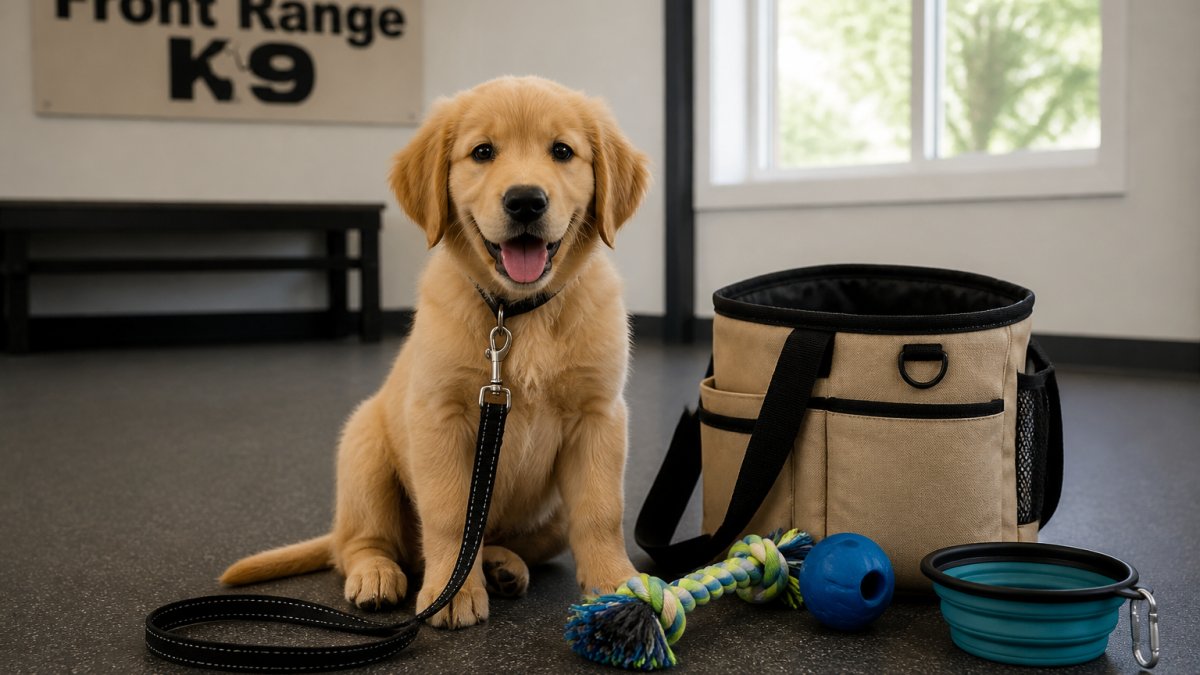
Pack a sturdy leash and fitted collar or harness, favorite toys, treats, a collapsible water bowl, cleanup bags, a mat, vaccination records, and a crate if your puppy is not yet comfortable in groups. A mat that smells like home helps a nervous dog settle faster.
First Puppy Training Class Expectations and How Long Classes Run
Most first puppy training classes run 45 to 60 minutes, and the first session is usually calmer than owners expect, opening with orientation on format, health requirements, and expectations. A first class typically moves through arrival and settling, a short owner briefing, gentle introductions, simple focus exercises, and a cool-down with Q and A, the first class builds confidence, not advanced skills.
If your puppy whines or hides, that is normal. Consider a temperament assessment before group work to see whether a puppy will thrive in a group or do better with private sessions first. Owner behavior sets the tone: arrive early, keep your voice low, clean up, keep your dog leashed, and respect other owners' space.
Preparing a Nervous Puppy: Step-by-Step Acclimation
A nervous puppy can still succeed in a group class, but it needs a slower on-ramp before the first session. A plan to consider: visit the area first from a distance, move closer over a few days with short calm visits, practice settling at home, introduce mild noise at low volume, meet one calm dog, do a short trial run, and arrive early on class day. If your puppy freezes, backs away, or refuses food, slow down. Many nervous puppies do well after one calm experience; others need private sessions first.
Health, Vaccination, and Class Eligibility
Class eligibility usually comes down to health records, not age alone. Most providers ask for proof of age-appropriate vaccinations; some require a recent vet check. The American Kennel Club's puppy vaccination schedule outlines the standard series most vets follow, which helps you time your first class correctly. Common eligibility points: core vaccinations started per your vet's schedule, no signs of illness on class day, a negative fecal or parasite check if required, and proof of a recent exam for older puppies. If your puppy is mid-series on vaccines, ask your provider about their policy, there is no single national rule.
Book your Temperament Test & Training Session →
How to Evaluate a Class and Instructor
The instructor matters more than the building. A good class fits your puppy's age, energy, and temperament, and a good instructor adjusts when a dog struggles. Ask before you commit: how many puppies are in each class, what training methods are used, how a nervous or reactive dog is handled, health and vaccination requirements, and what to practice between sessions. Look for a professional member of the International Association of Canine Professionals, one signal to look for, alongside experience and clear communication.
After the First Class: Your Practice Plan
What you do after class shapes the next session more than the class itself, and short, frequent practice beats one long cram session. Build a weekly rhythm: two to three short practice blocks per day, a review of the previous class's focus before the next session, plenty of rest, and a calm space for downtime.
| Stage | What Happens | Owner Focus |
|---|---|---|
| Before class | Health check and short visits | Build calm and comfort |
| First class | Orientation and gentle exercises | Let your puppy observe |
| First week after | Short daily practice | Keep sessions brief |
| Ongoing course | Skills build week by week | Stay consistent |
If you want a head start on real-world skills, our snake avoidance dog training sessions suit active dogs and owners who spend time outdoors.
Getting a puppy ready for its first class can feel like a lot to juggle, especially if your dog already pulls, barks, or jumps. Front Range K9 Academy has spent more than 36 years helping owners in Northern Colorado turn that stress into progress. Our private and small group sessions are tailored to each dog, and our proven methods are built for real-world results, from calmer walks to off-leash freedom.
Frequently Asked Questions
What age should puppies start obedience classes?
Most puppies are ready for a structured class between 10 and 16 weeks old, once they have their first rounds of vaccinations and your veterinarian gives the go-ahead. That window lines up with a key developmental stage when puppies absorb new routines quickly. Younger puppies may do better in shorter sessions, while older puppies can usually handle a full class without tiring out.
What should I bring to my puppy's first obedience class?
Pack a six-foot leash, a flat collar or harness that fits well, a few small toys, cleanup bags, and a water bowl for breaks. Bring your vaccination records if the instructor asks for them, and a mat or towel gives your puppy a familiar spot to settle on between exercises. Keep the bag light so you can focus on your puppy instead of juggling gear.
How long are puppy training classes?
Most group classes run 45 minutes to an hour, once a week for four to eight weeks. Puppies have short attention spans, so instructors often break the session into several short blocks with brief pauses. Expect the first class to run a little longer because of introductions and orientation, and plan to arrive 10 to 15 minutes early to let your puppy settle in.