 how-to
Can You Train an Old Dog? Yes — Here's How
Table of Contents
- Can You Train an Old Dog? What the Science Says
- Senior Dog Obedience Training: What to Focus On
- Training Senior Dogs with Health Issues
- How Long to Train an Older Dog Before You See Results
Last Updated: August 24, 2026
Can You Train an Old Dog? What the Science Says
You absolutely can train an old dog. Research into canine neuroplasticity confirms that adult and senior dogs retain meaningful learning capacity well into their later years. The brain doesn't simply "lock in" at a certain age, what changes is the speed of acquisition and physical context, not the dog's fundamental ability to learn.
One important distinction: there's a difference between a dog that's slow to learn and a dog showing signs of Cognitive Dysfunction Syndrome (CDS), a neurological condition resembling dementia in humans. According to the American Kennel Club's senior dog health resources, CDS is more common than most owners realize. If your dog seems confused rather than simply distracted, a veterinary checkup should come before any training program.
For most senior dogs, the challenge isn't capacity. It's patience, consistency, and adapting your approach to their physical reality.
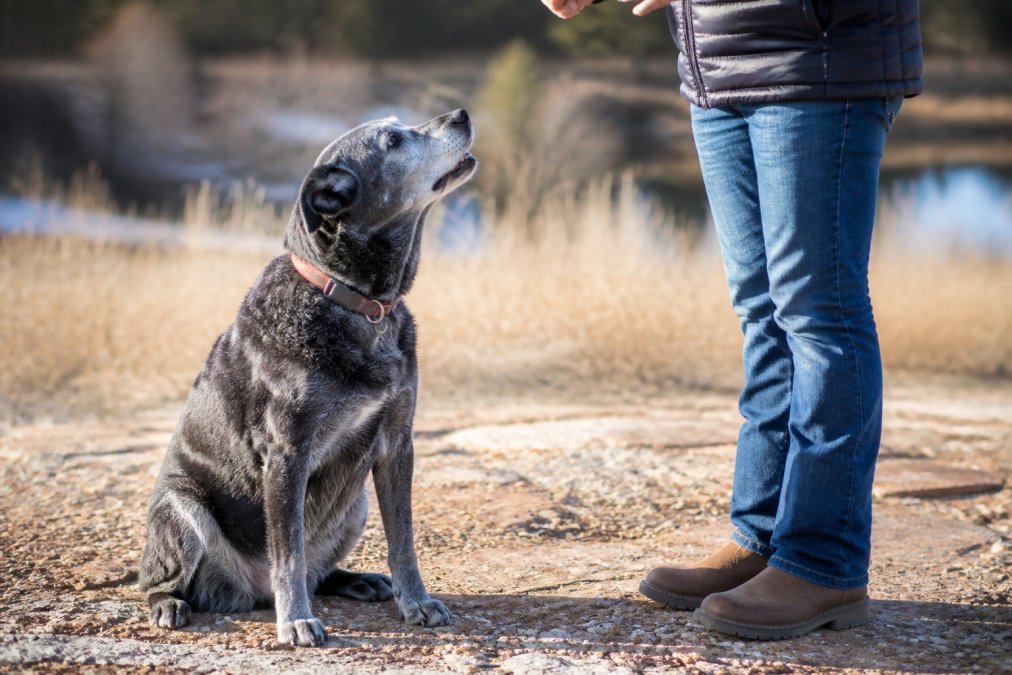
Senior Dog Obedience Training: What to Focus On
The real issue is prioritization. Senior dogs often come with years of established habits, which means behavioral modification takes longer than teaching a puppy a fresh cue. Your job is to decide which behaviors matter most and commit to those first.
Here's a practical framework for senior dog training priorities:
| Training Goal | Why It Matters | Approach |
|---|---|---|
| Loose-leash walking | Reduces joint stress; improves daily walks | Short, reward-based sessions |
| Recall (come) | Safety essential at any age | High-value treat rewards; low-distraction start |
| Impulse control | Reduces jumping, lunging, barking | Structured repetition; calm reinforcement |
| Basic obedience cues | Sit, stay, down build mental stimulation | Keep sessions under 10 minutes |
| House training refreshers | Seniors sometimes regress | Consistent schedule; no punishment |
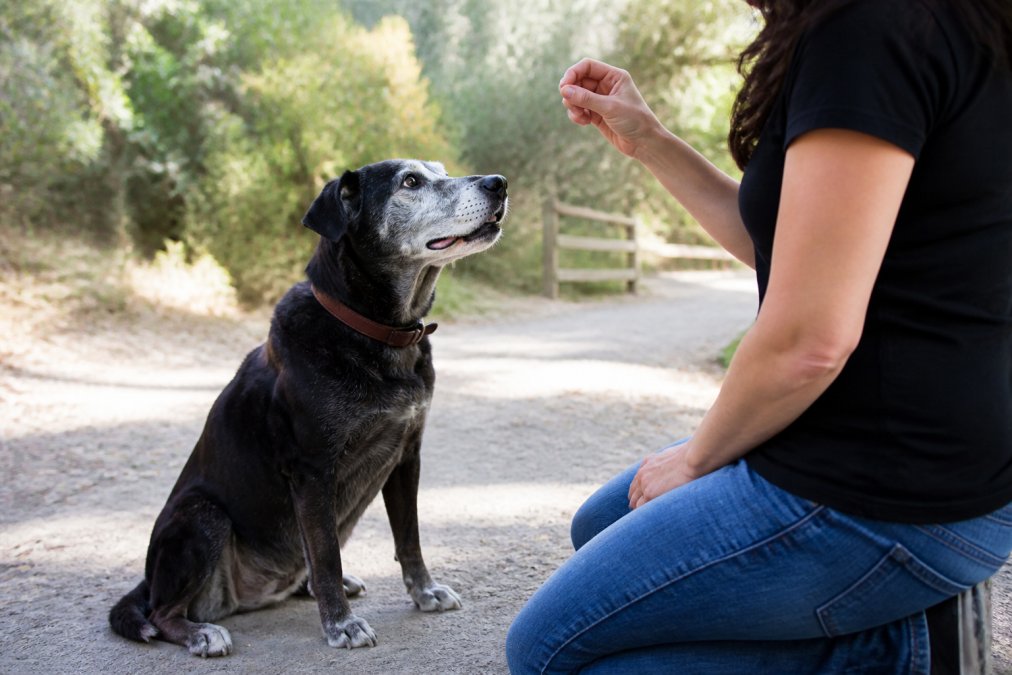
Short sessions are non-negotiable. Aim for 5-10 minute sessions, two to three times daily. Treat-based rewards and clicker training both work well with older dogs. Three clean repetitions with a reward is more effective than twenty repetitions with a frustrated dog.
Training Senior Dogs with Health Issues
Physical limitations change what training looks like entirely.
Arthritis is the most common issue. According to the American College of Veterinary Surgeons on canine arthritis, arthritis affects a significant portion of older dogs, often going undiagnosed until advanced. Before beginning any training program with a senior dog, a veterinary checkup is essential.
Practical adjustments for joint-friendly training:
- Train on soft surfaces: carpet, grass, or a non-slip mat rather than hardwood or tile
- Avoid prolonged sitting or lying positions if the dog shows stiffness rising
- Skip any exercises requiring jumping, sharp pivots, or extended standing
- Keep the training area small and accessible; eliminate stairs where possible
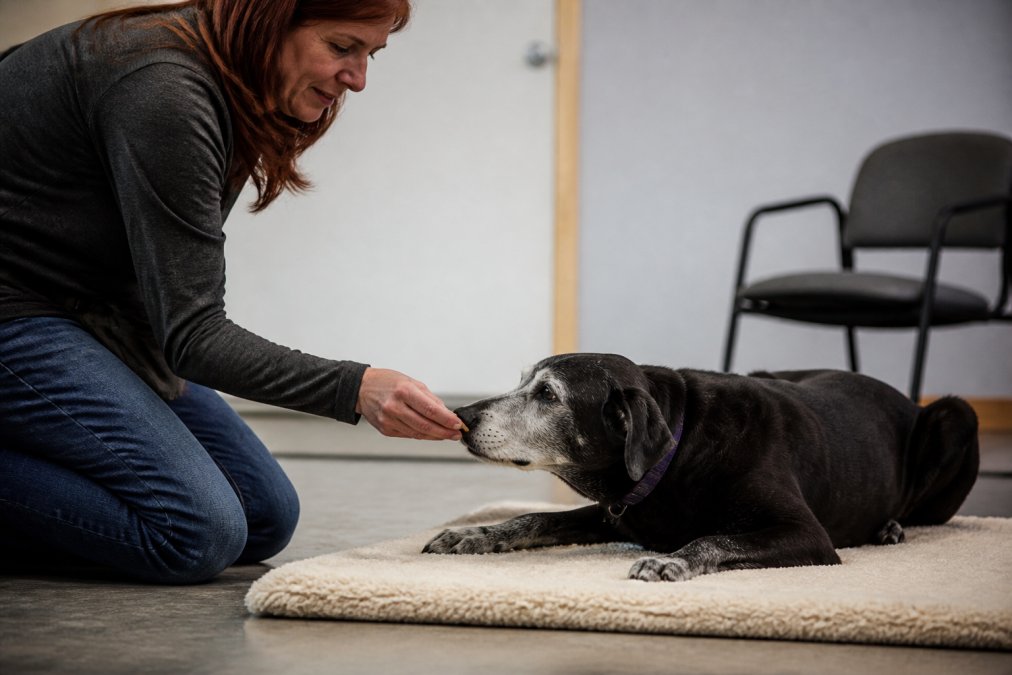
Sensory loss is the other major factor. Many senior dogs experience partial hearing or vision loss, which owners often mistake for stubbornness or cognitive decline. Transitioning to hand signals alongside verbal cues addresses this directly and often produces immediate improvement.
Omega-3 fatty acids, found in fish oil supplements, are associated with supporting cognitive function in aging dogs, according to veterinary nutrition research at the Cummings School of Veterinary Medicine. Talk to your vet about whether nutritional support makes sense alongside your training program.
How Long to Train an Older Dog Before You See Results
For basic obedience commands like sit, stay, and loose-leash walking, many senior dogs show meaningful improvement within two to four weeks of consistent daily practice. Habit breaking takes longer, expect four to eight weeks of dedicated work before that behavior reliably changes.
The owners who see the fastest results share a few traits: they train at the same times each day, keep sessions short and end on a success, and get professional guidance early rather than troubleshooting alone for months. Working with an experienced trainer can help compress the timeline, because you're not spending weeks on approaches that don't fit your specific dog's temperament and physical condition.
Frequently Asked Questions
Q: Can a dog be too old to train?
A: No dog is too old to learn, though the approach needs to match the dog's age and physical condition. Senior dogs retain learning capacity, and neuroplasticity does not disappear with age. What changes is attention span, energy level, and sometimes sensory ability. Shorter sessions, clear training cues, and reward-based methods work well at any age. A veterinary checkup before starting helps identify any underlying issues that could affect progress.
Q: How long does it take to train an older dog?
A: Most owners notice meaningful improvement in four to eight weeks of consistent training, though timelines vary by the behavior being addressed and the dog's history. Dogs correcting long-standing habits, like leash pulling or jumping, typically take longer than dogs learning a new cue from scratch. Patience and consistency matter more than session length. Short, frequent sessions of five to ten minutes tend to outperform infrequent marathon sessions for senior dogs.
Q: What are the best training methods for senior dogs?
A: Reward-based training using treats, praise, or toys is highly effective for senior dogs and keeps sessions motivating. Clicker training works well for dogs with good hearing. For dogs with arthritis or mobility issues, avoid positions that strain joints, skip prolonged sits or downs on hard floors. Keep sessions brief, end on a success, and schedule training when your dog is alert and comfortable. A professional trainer experienced with older dogs can tailor the approach to your dog's specific needs.
Senior dogs are worth the investment. The behavioral modification work you do now improves quality of life for both of you, often dramatically. If you're ready to stop guessing and start seeing real results, Front Range K9 Academy's trainers bring over 36 years of experience working with dogs of every age, size, and history. Book your Temperament Test and Training Session to get a clear plan built around your dog's specific needs.
This article was written using GrandRanker