 ultimate-guide
Dog Training for Busy Professionals: A 2026 Guide
Table of Contents
- Why Busy Professionals See Real Results From Dog Training
- The Benefits of Professional Dog Training When Your Calendar Is Full
- Dog Training Duration and Frequency: What Actually Fits a Work Week
- How Real-World Obedience Training Holds Up on a Tight Schedule
- Building a Training Routine Around a Full-Time Job
- Why Professional Guidance Beats Going It Alone
- Delegation, Technology, and Burnout Management for Owners
- Matching Training to High-Energy Breeds
- Getting Started Without Overhauling Your Week
- Frequently Asked Questions
Last Updated: September 16, 2026
Why Busy Professionals See Real Results From Dog Training
Dog training for busy professionals works because short, focused sessions beat long, sporadic ones. This guide from Front Range K9 Academy draws on 36 years of experience and 10,000+ dogs trained.
The core issue isn't time, it's consistency: three 10-minute sessions per week outperform a two-hour weekend marathon.
American Kennel Club guidance on how dogs learn notes that dogs retain behaviors best when training happens in short, regular bursts rather than occasional long sessions.
The Benefits of Professional Dog Training When Your Calendar Is Full
Professional guidance removes the guesswork that eats up your evenings. When a trainer structures the plan, you execute a routine that fits the hours you actually have.
The benefits of professional dog training show up quickly: a structured plan you follow rather than design, corrections to timing mistakes you can't see, real-world obedience that holds up on a busy sidewalk, and progress that continues even when your week goes sideways.
Dog Training Duration and Frequency: What Actually Fits a Work Week
The ideal frequency is three to five short sessions per week, each 10 to 15 minutes, under an hour weekly, enough to build reliable behavior.
| Session Type | Duration | Frequency | Best For |
|---|---|---|---|
| Micro session | 5-10 min | Daily | Command reinforcement |
| Standard session | 10-15 min | 3-5x weekly | New behaviors |
| Weekend session | 20-30 min | 1-2x weekly | Real-world practice |
| Trainer session | 45-60 min | Weekly or biweekly | Professional guidance |
Dog training duration matters less than rhythm: brief daily practice beats one hard weekly session.
How Real-World Obedience Training Holds Up on a Tight Schedule
Real-world obedience training is the difference between a dog that sits in your kitchen and one that holds a command on a crowded street.
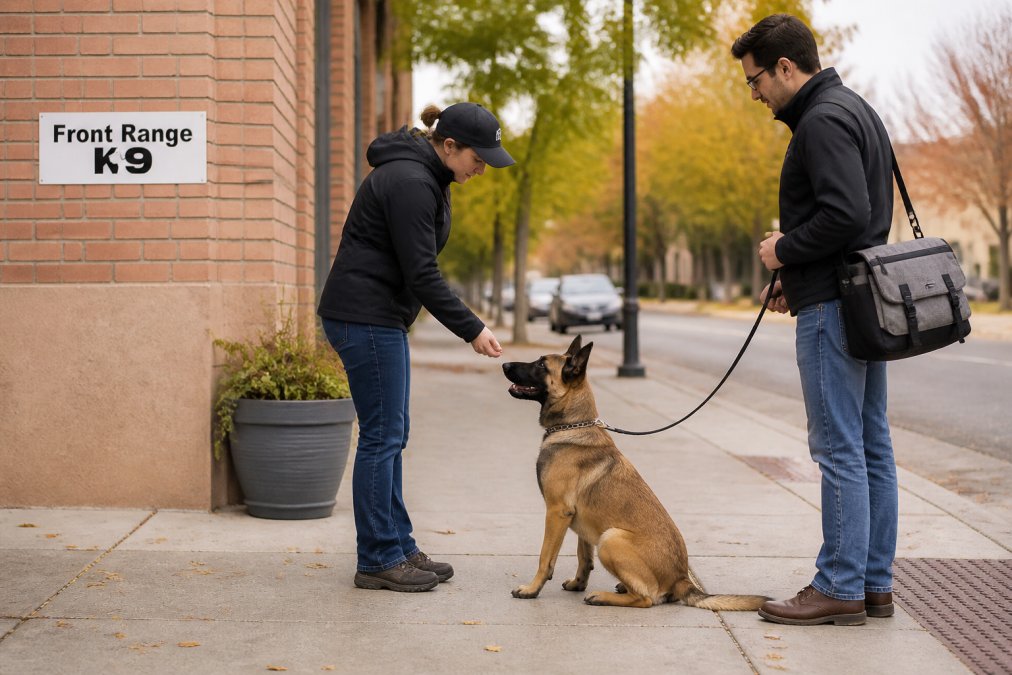
Real-world practice fits into what you already do: a five-minute pause on your morning walk or a moment at the front door counts as a training session when structured.
Building a Training Routine Around a Full-Time Job
Building a training routine starts with attaching short sessions to things you already do without fail, so you stop relying on willpower.
Consistency matters more than session length. When the routine is fixed, the dog anticipates it, and anticipation speeds learning.
Why Professional Guidance Beats Going It Alone
Professional guidance is the fastest route past the plateau most owners hit; generic advice fails because it doesn't account for your dog's temperament or your schedule.
This is where Front Range K9 Academy fits. With 36+ years of experience and membership in the International Association of Canine Professionals, the academy builds private and small-group sessions around your calendar. As Michael Horner of Johnstown put it, "Front Range K9 was much more detailed in their lessons and met us where we were."
Delegation, Technology, and Burnout Management for Owners
Delegation and technology can carry part of the load, but they don't replace structured training. Busy professionals use reminders, shared calendars, and dog walkers to protect training time.
Burnout is the real risk: owners who train every spare minute quit within weeks.
Matching Training to High-Energy Breeds
High-energy breeds need mental stimulation as much as physical exercise. A dog that gets a long run but no mental work often finds its own entertainment, usually at your expense.
Getting Started Without Overhauling Your Week
Starting is simpler than most owners expect. Book an assessment, get a plan built around your real schedule, and commit to a few short sessions per week.
Frequently Asked Questions
How can busy professionals maintain consistent training standards?
Consistency comes from a fixed routine rather than long sessions. Short, high-frequency practice, such as a few minutes before work, during a lunch break, or on an evening walk, keeps cues fresh without eating into your day. Building those moments into existing habits, like feeding time or the daily walk, makes them automatic. Professional guidance can set the structure so you know exactly what to practice and how often, which removes the guesswork that usually causes training to slip.
What should busy owners look for in a professional dog trainer?
Look for documented experience, a clear training philosophy, and programs built around real-world obedience rather than classroom-only drills. Ask how many dogs the trainer has worked with, whether they offer private sessions that fit a tight schedule, and how they measure progress. A trainer who explains duration and frequency expectations up front, and who can point to long-term results, is a better fit than one promising overnight fixes.
What is the 3-3-3 rule for dog training?
The 3-3-3 rule describes how a dog adjusts to a new home or routine: roughly three days to decompress, three weeks to settle into a routine, and three months to feel fully comfortable. For busy professionals, it sets realistic expectations. Progress with commands and daily habits builds over weeks, not days, so a steady schedule matters more than cramming sessions into one free weekend.
A full calendar shouldn't cost you a well-behaved dog. Front Range K9 Academy builds training around working professionals, with private and small-group sessions, proven methods that hold up in the real world, and over three decades of experience behind every plan. Book your Temperament Test & Training Session and get a routine that fits the week you actually have.