 ultimate-guide
Dog Training for Family Dogs: A Practical Guide
Table of Contents
- Why Dog Training Matters for Family Dogs
- Can You Train an Old Dog? Breaking the Myth
- How Long Does Dog Training Take to Show Results
- Frequently Asked Questions
Last Updated: September 17, 2026
Why Dog Training Matters for Family Dogs
Dog training for family dogs transforms frustrations like leash pulling, barking at guests, or jumping into manageable behaviors. At Front Range K9 Academy, we've worked with thousands of family dog owners who discovered that structured training delivered results they didn't expect.
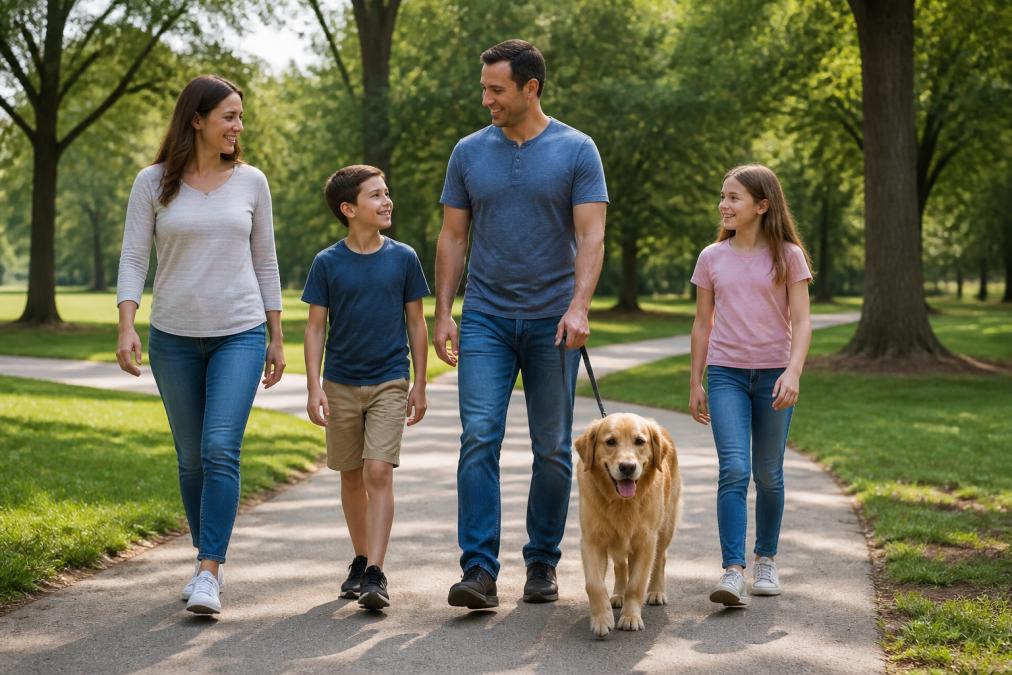
Dog training for family dogs builds communication, reduces stress, and creates freedom to enjoy your pet. Families report that walks become enjoyable and their dogs integrate better into household routines.
Can You Train an Old Dog? Breaking the Myth
Yes, you can train an old dog. Dogs of any age retain the capacity to learn and adapt. What changes with age isn't learning ability, it's consistency and patience in approach.
Adult and senior dogs often learn faster than puppies because they have impulse control and attention span. The process requires clear communication, consistent handler behavior, and realistic timelines.
The real barrier isn't age, it's owner expectation and consistency. Commit to consistent practice over several weeks and you'll see meaningful change.
How Long Does Dog Training Take to Show Results
Dog training for family dogs typically shows initial results within 2-4 weeks of consistent practice, with meaningful behavioral change over 8-12 weeks. Timeline depends on the specific behavior, how long it's been established, handler consistency, and the dog's temperament.
Simple behaviors like leash pulling improve within weeks, while reactivity or anxiety-driven barking take longer because they involve deeper emotional responses.
Book your Temperament Test & Training Session →
The most important variable is consistency. Daily 15-minute practice sessions produce faster progress than sporadic longer sessions. Real-world obedience develops through repeated practice in your home, neighborhood, and daily routine.
By week 8-12, behaviors feel genuinely resolved because they've become automatic for both dog and handler.
Dog training for family dogs works because it addresses communication, not just compliance. When your dog understands what you're asking and why it matters, behavioral issues resolve naturally. Front Range K9 Academy has spent over 36 years helping families achieve the calm, obedient dogs they want. Beyond common behavioral challenges, we also offer specialized training like snake avoidance dog training for families in areas where wildlife encounters are a concern. With proven methods tailored to your dog's age and temperament, you can transform frustration into partnership. Book your Temperament Test and Training Session today to see how real-world obedience changes your life with your dog.
Frequently Asked Questions
Can you really train an old dog, or is it too late to fix behavioral problems?
Dogs of any age can learn new behaviors and improve their habits. Adult dogs often progress quickly because they have better focus and impulse control than puppies. The key is consistency and realistic expectations. A dog that's pulled on the leash for five years won't change overnight, but meaningful improvement happens within weeks of structured training. Age is not the limiting factor, the owner's commitment to reinforcing what the dog learns is what matters most.
How long does dog training take before you see real changes in behavior?
Most families notice improvement in basic behavioral issues within 2-4 weeks of consistent training. Pulling, jumping, and basic obedience often respond quickly. More complex issues like separation anxiety or reactivity may take 8-12 weeks or longer. The timeline depends on the dog's age, the severity of the behavior, and how consistently the owner practices between sessions. Professional guidance accelerates results compared to trial-and-error approaches.
What makes professional dog behavioral modification techniques different from training on your own?
Professional trainers diagnose the root cause of behavior, not just the symptom. A dog that jumps on guests might be seeking attention, lacking impulse control, or responding to excitement, each requires a different approach. Professionals also teach handlers how to communicate consistently, which is why dogs trained with expert guidance maintain their progress long-term. DIY methods often fail because owners unknowingly reinforce the very behaviors they're trying to stop.