 ultimate-guide
Dog Training for Outdoor Activities: Trail Ready
Table of Contents
- Why Outdoor Dog Training Changes Everything on the Trail
- Off-Leash Dog Training: Building Reliable Freedom Outdoors
- Dog Recall Training for Trails: Coming Back Every Time
- Adventure Dog Training Requirements: Safety Gear and Preparation
- Trail Etiquette and Stewardship for Adventure Dogs
- Enrichment, Scent Work, and Mental Stimulation for Outdoor Dogs
- Building a Trail-Ready Dog
- Frequently Asked Questions
Last Updated: September 14, 2026
Why Outdoor Dog Training Changes Everything on the Trail
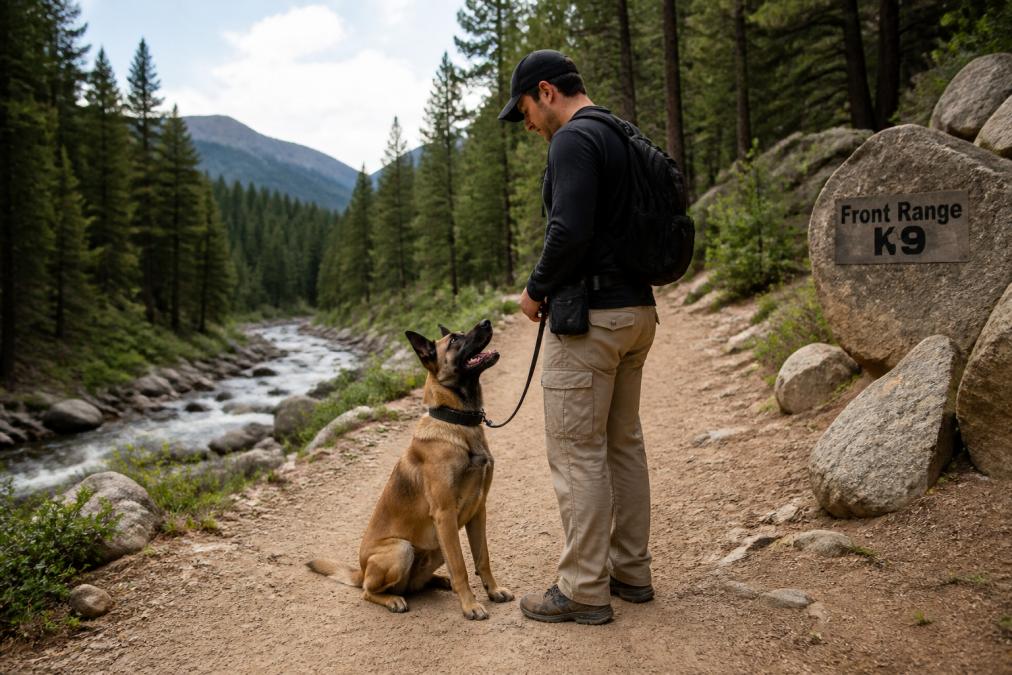
Dog training for outdoor activities builds obedience, focus, and safety skills for environments where wildlife, terrain, and distractions compete for your dog's attention. At Front Range K9 Academy, we've spent 36 years watching dogs who perform flawlessly indoors fall apart the moment a trail opens up.
Outdoor environments stack distractions in ways indoor spaces never do, scents, small animals, and other trail users appear without warning. The American Kennel Club's guidance on canine good citizen and outdoor manners treats real-world distraction work as a core skill, not an advanced add-on.
The payoff: off-leash freedom on a hike, a dog who checks in without being called twice, and the confidence to take your dog anywhere.
Off-Leash Dog Training: Building Reliable Freedom Outdoors
Off-leash dog training is the structured process of teaching a dog to respond reliably without physical restraint, proofing obedience around wildlife, terrain changes, and other people before the leash comes off.
Three things separate dogs who earn off-leash freedom: impulse control under real pressure, engagement with the handler, and conditioning for the environment. Off-leash work is a safety protocol, not a reward, when a dog ignores a recall near a cliff edge or a leashed dog, the consequences land on everyone.
Breed and age matter more than owners expect. Scent hounds follow their noses with a drive that outcompetes most training histories, sighthounds can hit a sprint before a command registers, and herding breeds may fixate on movement.
How long does off-leash training take?
Timelines vary, but most owners see dependable off-leash behavior emerge over months of consistent work, not weeks. Dogs with strong prey drive or a long history of ignoring cues need more time.
Dog Recall Training for Trails: Coming Back Every Time
Dog recall training for trails teaches a dog to return immediately regardless of what else is happening, and it is the single skill that determines whether off-leash hiking is safe.
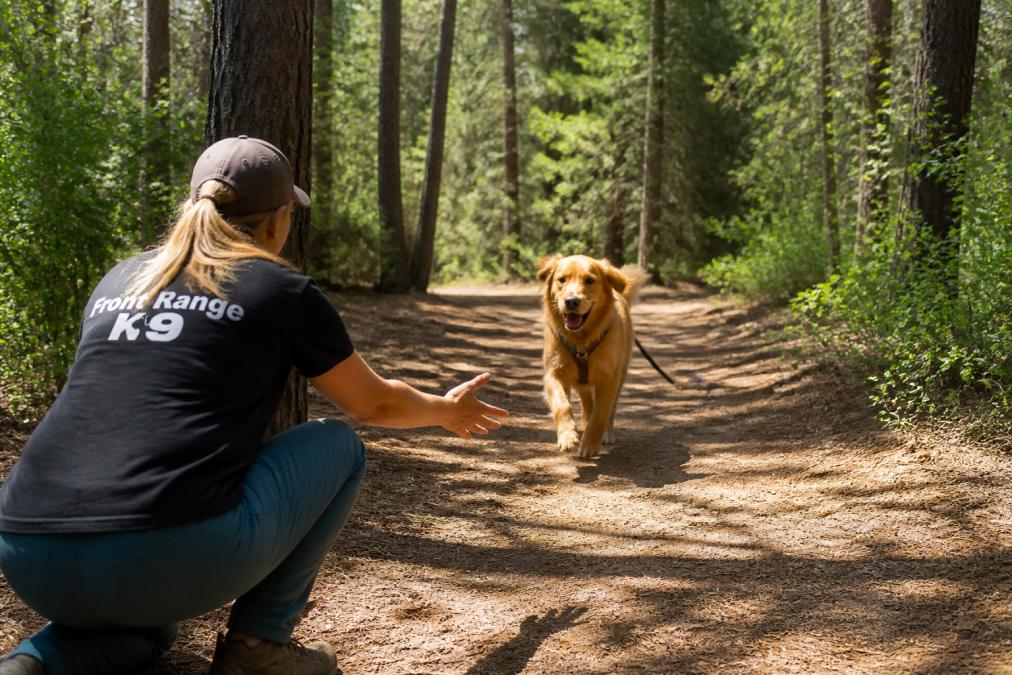
A recall that only works in the backyard is not a recall. Three factors make trail recall harder than home practice: distance, competing reinforcement from wildlife, other dogs, and novel smells, and terrain and sightlines, since a dog who can't see you must trust the cue rather than your body language.
The Centers for Disease Control and Prevention reports that dog bites remain a significant public health issue, and dog bite prevention guidance notes that unfamiliar situations and uncontrolled environments raise risk. An unreliable recall near other trail users is exactly that kind of situation.
What makes a recall reliable in high-distraction environments?
Reliability comes from practicing the recall around gradually increasing distraction, not from repeating it in calm settings.
Adventure Dog Training Requirements: Safety Gear and Preparation
Adventure dog training requirements come down to preparation: the right gear, a realistic read on your dog's physical limits, and a plan for the situations you hope never happen.
| Category | What to Carry | Why It Matters |
|---|---|---|
| Restraint | Long line, backup collar, spare leash | Lets you practice safely and recover control if a clip fails |
| Identification | Tagged collar, updated microchip info | Fast reunification if your dog bolts |
| First aid | Gauze, vet wrap, tick removal tool, saline | Handles cuts, punctures, and paw injuries on the trail |
Seasonal adjustments matter as much as gear. Summer heat raises the risk of overheating and burned paw pads, winter brings ice, salt, and reduced scent visibility, and spring and fall bring wildlife activity and hunting seasons. Breed limitations deserve an honest look too, brachycephalic breeds struggle in heat and on sustained climbs, heavy-coated breeds overheat faster than owners expect, and senior dogs may handle a flat loop well and a steep climb poorly.
Trail Etiquette and Stewardship for Adventure Dogs
Trail etiquette is the set of shared expectations that keeps public land open to dogs, and stewardship is the practice of leaving those spaces better than you found them.
The basics hold up across nearly every trail system: keep your dog within sight and under voice control, yield to other trail users (especially horses, cyclists, and leashed dogs), pack out waste, respect seasonal closures and wildlife protection areas, and stay on designated trails. A single uncontrolled dog charging a leashed dog can turn a land manager against allowing dogs at all.
Enrichment, Scent Work, and Mental Stimulation for Outdoor Dogs
Enrichment gives dogs outlets for natural behaviors like searching, digging, and chasing in ways that satisfy instinct rather than create problems. Outdoor environments are the richest enrichment tool available.
Scent work and nose games are the most portable option, twenty minutes working a scent problem often settles a dog better than a run. Other outdoor enrichment options worth building into your routine: lure coursing, which lets sighthounds and other chase-driven breeds sprint safely; obstacle course work, which builds body awareness and confidence; digging pits, which give a natural behavior a designated home; and structured searching games. Mental stimulation and physical exercise solve different problems, and dogs need both.
Building a Trail-Ready Dog
Outdoor freedom is earned through preparation, not enthusiasm. Owners who skip the distraction work, the recall proofing, and the gear planning end up with a dog they can't trust off-leash, fewer trails, shorter hikes, and more stress for both of them.
That's the gap Front Range K9 Academy was built to close. With more than 36 years of professional experience and over 10,000 dogs and owners trained, our private sessions and small group classes are designed around real-world obedience rather than classroom performance. We're a proud professional member of the International Association of Canine Professionals, and our methods hold up on an actual trail, not just in a training yard.
If your dog pulls, lunges, ignores recall, or simply hasn't been tested outside a fenced yard, the fix starts with a clear picture of where you stand. Book your Temperament Test & Training Session with Front Range K9 Academy and find out what your dog is genuinely ready for.
Frequently Asked Questions
What is the 3-3-3 rule for dogs?
The 3-3-3 rule describes how rescue dogs adjust to a new home: three days to decompress, three weeks to settle into routines, and three months to feel fully comfortable. Outdoor dog training benefits from this same patience. A dog that seems distracted or hesitant on early trail outings often needs several weeks of consistent, low-pressure exposure before reliable behavior shows up. Rushing the timeline usually backfires.
How do you prepare a dog for off-leash outdoor activities?
Start with structured off-leash dog training in fenced, low-distraction spaces before moving to open terrain. Build a strong recall cue, practice around wildlife and other trail users, and confirm your dog responds consistently before removing the leash. Carry safety gear like a long line and first aid supplies. Professional guidance helps owners avoid the common mistake of advancing too quickly and losing hard-won reliability.
What are the core obedience skills needed for hiking with a dog?
A trail-ready dog needs a dependable recall, a solid stay, loose leash walking, and reliable leave-it and drop-it responses. These skills form the foundation of adventure dog training requirements because trails present constant temptations: food scraps, wildlife, other hikers, and uneven ground. Dogs that master these commands enjoy more freedom, and owners worry less, which makes every outing more enjoyable for both.
Trail access, off-leash freedom, and stress-free hikes all trace back to the same foundation: training that holds up when the environment stops cooperating. Front Range K9 Academy offers private and group sessions tailored to your dog's specific needs, whether that's basic manners, off-leash reliability, or snake avoidance work before warm weather arrives. Get started with Front Range K9 Academy and build the kind of obedience that lets you both enjoy the trail instead of managing it.