 how-to
How to Stop Dog Pulling on Leash: A 2026 Guide
Table of Contents
- Why Dogs Pull on the Leash (And What It Tells You)
- How to Stop Dog Pulling on Leash: Core Techniques
- Starting in Low-Distraction Environments
- Common Leash Pulling Mistakes That Slow Your Progress
- How Long Does It Take to Stop Leash Pulling?
- Stop Dog Pulling on Leash: When to Get Professional Help
- Frequently Asked Questions
Last Updated: August 24, 2026
Why Dogs Pull on the Leash (And What It Tells You)
Pulling on the leash is one of the most common complaints dog owners bring to professional trainers. At Front Range K9 Academy, with over 36 years of experience and more than 10,000 dogs trained, we hear it constantly. The good news is that pulling is almost always a training gap, not a character flaw.
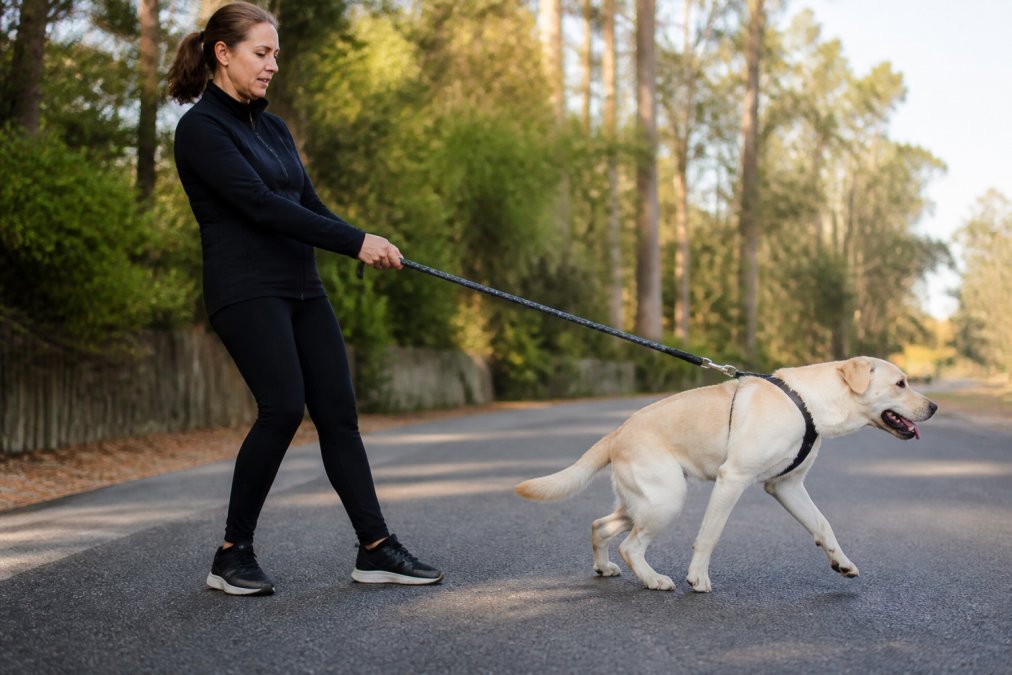
Dogs pull because forward movement rewards them. Every time a dog lunges ahead and the walk continues, that dog learns that leash tension equals progress. Add in the sensory excitement of being outside, new smells, other animals, moving cars, and you have a dog whose natural impulse to explore runs directly against your goal of loose-leash walking. Pulling is a momentum problem, not aggression or dominance.
Leash Pulling vs. Leash Reactivity: Know the Difference
Leash pulling is forward-directed. The dog wants to get somewhere faster and uses leash pressure to do it. The dog is generally happy, tail up, body loose.
Leash reactivity is a stress response. The dog reacts to a specific trigger, another dog, a jogger, a bicycle, with barking, lunging, or spinning. The body language is tense, the focus is locked on the trigger, and the behavior is driven by fear or frustration rather than excitement.
This distinction matters because the training approach differs. Techniques for stopping pulling won't resolve reactivity on their own. If your dog is calm on walks except when a trigger appears, you are dealing with reactivity, not pure pulling.
Breed-Specific Pulling Behaviors Worth Knowing
Not all pulling looks the same. Sled dog breeds like Huskies and Malamutes are selectively bred to pull with sustained force. Expecting a Husky to walk on a loose leash without structured training is unrealistic without proper training.
Scent hounds like Beagles pull with their nose down, following odor trails with intense focus. Their distraction threshold is low when a scent is involved.
High-energy working breeds like German Shepherds and Border Collies pull from mental under-stimulation as much as physical drive. Their pulling often decreases significantly when their cognitive needs are met alongside physical exercise.
Knowing your dog's breed tendencies lets you set realistic timelines and choose the right training approach from the start.
How to Stop Dog Pulling on Leash: Core Techniques
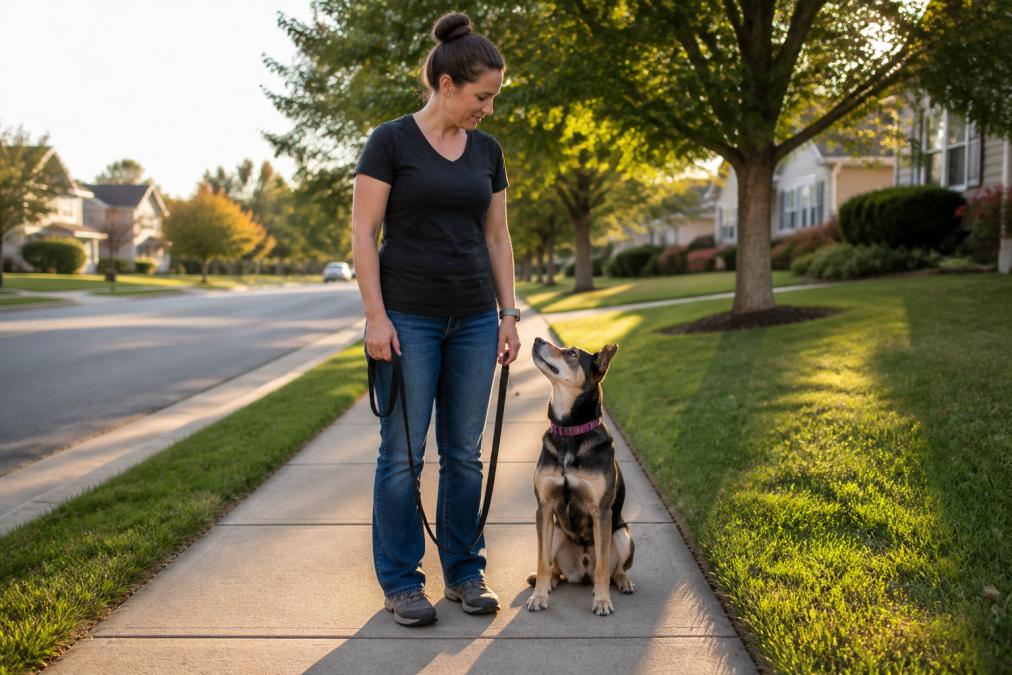
Stopping leash pulling comes down to one principle: forward movement only happens when the leash is slack. Every technique below is a variation on that rule.
Starting in Low-Distraction Environments
The biggest mistake owners make is trying to train loose-leash walking on the same busy sidewalk where the pulling already happens. Start in your backyard or a quiet hallway. With zero environmental distractions, your dog can actually focus on what you are communicating.
A practical progression looks like this:
- Backyard or quiet indoor space
- Quiet street at low-traffic times
- A park path with occasional foot traffic
- Higher-distraction areas: dog parks nearby, busy trails, pet-friendly stores
Only move to the next level when your dog is succeeding at the current one at least 80% of the time.
Managing Distractions as Your Dog Improves
Once your dog has a solid reinforcement history in low-distraction settings, introduce distractions gradually. The goal is to raise your dog's distraction threshold so environmental stimuli no longer override their training.
Practical tools for managing distractions:
- Adjust your walking pace. Moving faster gives your dog less time to fixate on environmental triggers.
- Create distance. Cross the street or change direction before your dog reaches their threshold.
Book your Temperament Test & Training Session →
Common Leash Pulling Mistakes That Slow Your Progress
Inconsistency across handlers. If one family member allows pulling and another doesn't, the dog learns that pulling works sometimes. Every person who walks the dog must follow the same rules.
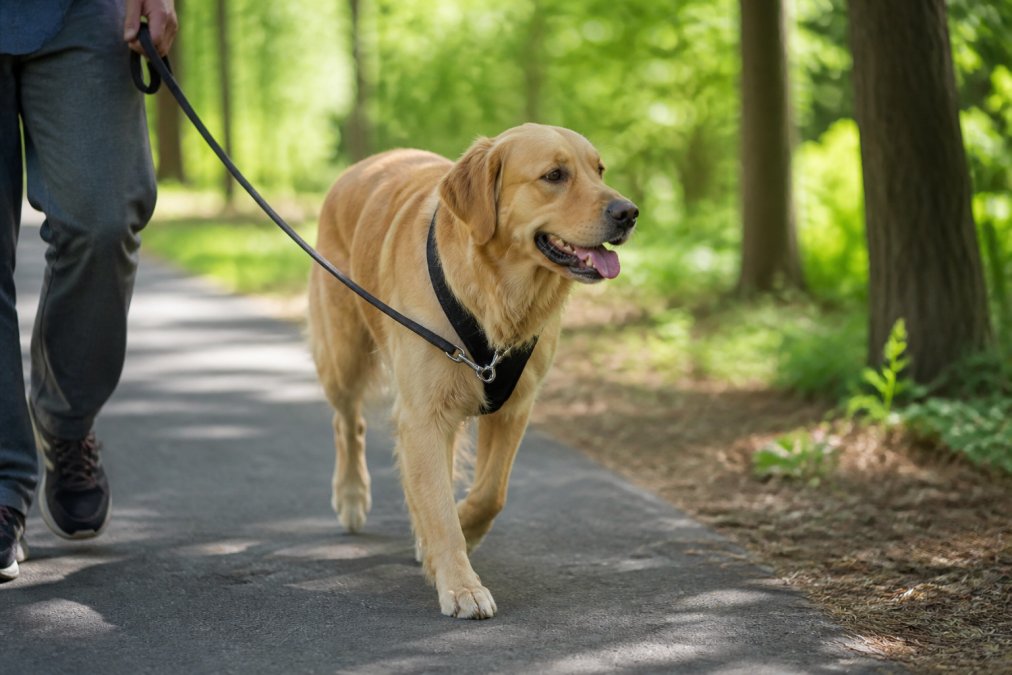
Continuing to walk when the leash is tight. Every step you take while the leash is under tension teaches your dog that tension is acceptable. Stop. Every time.
Skipping the low-distraction phase. Trying to train in a high-distraction environment before the dog understands the concept sets you up for failure.
Yanking or jerking - this is not training. Effective leash training uses leash to communicate with the dog.
Expecting results too fast. Leash pulling is often deeply ingrained. Changing it takes weeks of consistent practice.
How Long Does It Take to Stop Leash Pulling?
Most dogs show noticeable improvement in leash pulling within two to four weeks of consistent daily practice. "Consistent" means every walk, not just designated training sessions.
Several factors affect the timeline:
- How long the dog has been pulling. A puppy with two months of pulling history responds faster than an adult dog with three years of reinforced behavior.
- Breed and drive level. High-drive breeds require more repetitions.
- Training frequency. Two 10-minute sessions per day outperform one 30-minute session.
- Handler consistency. Inconsistency adds weeks to any timeline.
An adult dog that has pulled for years is absolutely trainable. The timeline is longer, but the outcome is the same.
Mental Stimulation as a Training Accelerator
A dog that is mentally exhausted pulls less. This is not a substitute for leash training, it is a complement to it. Many dogs pull partly because their cognitive needs are not being met.
Practical options:
- Sniff breaks with permission. Allow structured sniffing on a cue ("go sniff"). Sniffing is mentally tiring and can be used as a reward for loose-leash walking.
- Puzzle feeders. Feed meals from food puzzles or Kongs rather than bowls.
- Training sessions before walks. Five minutes of obedience work before a walk puts the dog in a more focused mental state.
- Nose work games. Searching for hidden treats engages the dog's scent drive productively.
Stop Dog Pulling on Leash: When to Get Professional Help
Self-guided training works for many dogs. There are situations where professional guidance is the faster, safer path.
Seek professional help when:
- Your dog's pulling is accompanied by lunging, barking, or growling at triggers
- The pulling is strong enough to pose a fall risk for the handler
- You have been working consistently for four to six weeks with no measurable improvement
- The dog is showing any signs of aggression during walks
- You are unsure whether what you are seeing is pulling or something more complex.
Pulling on the leash does not have to define every walk you take. The techniques in this guide, stop-and-wait, red light/green light, marker training, proper equipment, and consistent environmental management, give most dogs and owners a clear path to stress-free walks. For dogs with more complex histories or reactivity layered on top of pulling, professional support makes the process faster and more reliable. Book your Temperament Test and Training Session with Front Range K9 Academy and get a personalized plan built around your specific dog, your goals, and your schedule.
Frequently Asked Questions
Why does my dog pull on the leash when they see other dogs?
This is often leash reactivity, which is different from general pulling. When a dog spots another dog and lunges or strains toward it, the trigger is arousal or anxiety, not just forward momentum. Counter-conditioning and desensitization — rewarding calm behavior at increasing distances from other dogs — addresses the emotional response driving the behavior. General stop-and-wait methods help with everyday pulling but won't fully resolve reactivity without targeted behavior modification work.
My dog has been pulling for years — can it really be fixed?
Yes. Older dogs can absolutely learn loose-leash walking. The process takes more patience because a long reinforcement history of pulling is well established, but the same reward-based techniques apply. Expect the timeline to be longer than with a puppy — weeks rather than days — and prioritize short, focused training sessions over long walks. Dogs that have pulled for years have simply practiced a habit; with consistent behavior modification, that habit changes.