 ultimate-guide
Is Professional Dog Training Worth It in 2026?
Table of Contents
- The Reality of Dog Behavioral Issues
- Aggressive Dog Training and Behavioral Modification
- How Long Does Professional Dog Training Take?
- Private Dog Training vs Group Classes
- The Real Return on Investment
- Frequently Asked Questions
Last Updated: September 2, 2026
The Reality of Dog Behavioral Issues
Nearly all dogs in the United States exhibit at least one behavioral issue. According to a Texas A&M University study on canine behavior, 99.12% of dogs show moderate to serious behavioral problems, with separation anxiety and attachment behaviors being the most common. The question isn't whether your dog has behavioral issues, but whether professional dog training is worth the investment. At Front Range K9 Academy, we've worked with thousands of owners facing this decision.
Aggressive Dog Training and Behavioral Modification
Aggression stands as one of the most serious behavioral concerns dog owners face. Research found that approximately 55.6% of dogs display moderate to serious aggressive behaviors on at least two occasions, ranging from food guarding to inter-dog reactivity.
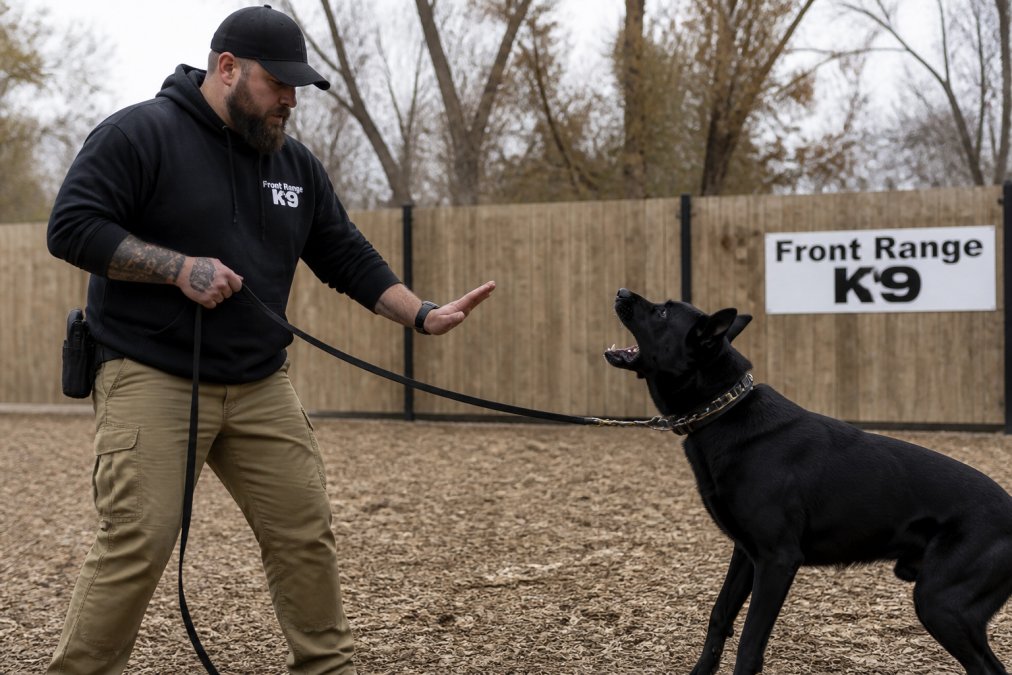
What makes professional dog training particularly valuable for aggression is that it addresses the root cause rather than just suppressing the symptom. A certified professional can identify whether your dog's aggression stems from fear, resource guarding, lack of socialization, or something else entirely. Each source requires a different approach, and misdiagnosing the problem often makes it worse. Professional trainers bring expertise in reading canine body language and understanding what's driving the behavior, knowledge that's difficult to develop on your own. The timeline for behavioral modification varies significantly, but consistency in application and the owner's willingness to reinforce what the dog learns are key factors.
How Long Does Professional Dog Training Take?
The duration of professional dog training depends on the dog's age, the severity of behavioral issues, and the training approach. Dogs trained once weekly showed better learning retention and higher success rates than those trained five times weekly, according to research in the Journal of Veterinary Behavior. Most owners see noticeable changes within 4-6 weeks of consistent training, though lasting behavioral change typically requires 8-12 weeks or longer. Dogs need time to generalize skills from the training environment to real-world situations like busy sidewalks, dog parks, and family gatherings. Behavioral issues don't stay fixed without maintenance and ongoing reinforcement.
Private Dog Training vs Group Classes
| Training Format | Best For | Time Commitment | Customization |
|---|---|---|---|
| Private Sessions | Behavioral issues, aggression, specialized needs | Flexible scheduling | Tailored to individual dog |
| Group Classes | Basic obedience, socialization, budget-conscious owners | Fixed weekly schedule | Standardized curriculum |
Private training offers personalized attention and customized approaches for your dog's specific issues. The trainer focuses entirely on your dog and can adjust methodology in real time based on what's working. This flexibility is invaluable when dealing with complex behavioral problems. Group classes provide socialization opportunities and are typically more affordable, working well for puppies and dogs with basic obedience needs. However, if your dog has aggression issues or severe behavioral problems, group settings can reinforce unwanted behaviors or create stress.
The Real Return on Investment

Evaluating whether professional dog training is worth it requires looking beyond the immediate cost. Consider what behavioral problems are actually costing you: stress during walks, anxiety about having guests over, inability to take your dog to outdoor activities, or safety concerns. According to Fortune Business Insights market analysis, around 71% of U.S. households invest in behavioral training, indicating widespread recognition of its value.
Book your Temperament Test & Training Session →
The real ROI comes from what you gain: stress-free walks, the ability to take your dog places, improved safety around children and other pets, and a stronger human-dog bond. Professional training also prevents costly mistakes. Well-intentioned but incorrect approaches can entrench behavioral problems, making them harder to fix later. Beyond common behavioral concerns, specialized training can address specific environmental challenges, for example, snake avoidance dog training helps protect dogs in areas where venomous snakes are a genuine hazard, adding another layer of safety and peace of mind.
Professional dog training is worth it when your dog's behavioral issues are affecting your quality of life, when you've tried addressing problems on your own without success, or when safety is a concern. Front Range K9 Academy brings 36+ years of professional experience and a track record of training over 10,000 dogs. The team uses proven, organized methods designed for real-world results, genuine behavioral change that holds up in everyday life. Book your Temperament Test and Training Session today.
Frequently Asked Questions
Can a dog trainer really fix behavioral problems my dog has had for years?
Yes. According to a 2025 Texas A&M study of over 43,000 dogs, 99.12% exhibit behavioral issues, and professional training addresses the root causes rather than just symptoms. Dogs of any age can learn new behaviors through professional guidance. The key difference is that a certified trainer creates a structured plan tailored to your dog's specific issues, whether aggression, separation anxiety, or leash pulling, and teaches you how to maintain progress at home. Success depends on owner consistency after training ends.
How long does professional dog training take to show results?
Results timeline varies by issue severity and training frequency. Some owners see behavioral improvements within 2-4 weeks of consistent training, while deeper behavioral modification may take 8-12 weeks or longer. A 2007 Journal of Veterinary Behavior study found that dogs trained once weekly actually learned faster and with higher success rates than those trained five times weekly, suggesting consistency matters more than frequency. Your trainer will establish realistic expectations based on your dog's specific behavioral challenges.
Is private dog training or group classes better for my dog?
Private sessions work best for aggressive dog training, severe behavioral issues, or dogs that need individualized attention. Group classes suit dogs with basic obedience needs and provide socialization benefits. Private training allows your trainer to focus entirely on your dog's specific problems and teach you directly, while group classes offer lower cost and peer support. Many owners combine both: private sessions to address critical issues, then group classes for maintenance and socialization. Your trainer can recommend the best fit after assessing your dog.
This article was written using GrandRanker