 ultimate-guide
Off Leash Training for Dogs: A 2026 Safety-First Guide
Table of Contents
- Why Off Leash Training for Dogs Fails Without a Safety Framework
- The Dog Obedience Training Timeline: What Realistic Off Leash Training Looks Like
- Building Reliable Recall Training and Managing Dog Distractions
- Frequently Asked Questions
Last Updated: September 8, 2026
Why Off Leash Training for Dogs Fails Without a Safety Framework
Approximately 25% of pet parents avoid public spaces due to their dog's unpredictable reactions, according to 2024 industry data cited in Sit Means Sit's 2026 training literature. That statistic reveals the real problem with off leash training for dogs: most owners chase freedom before establishing control. At Front Range K9 Academy, we've spent over 36 years watching this pattern repeat, and the fix isn't more commands, it's a complete safety framework built before the leash ever comes off.
Off leash training requires reliable responses without physical restraint, but it fails when owners skip foundational steps like impulse control and emergency response. Research confirms that training methods measurably affect dog behavior, as documented in ScienceDirect's study on dog behavior and leash use. For dogs whose instincts put them at risk in open areas, snake avoidance dog training can be a critical layer of that safety framework.
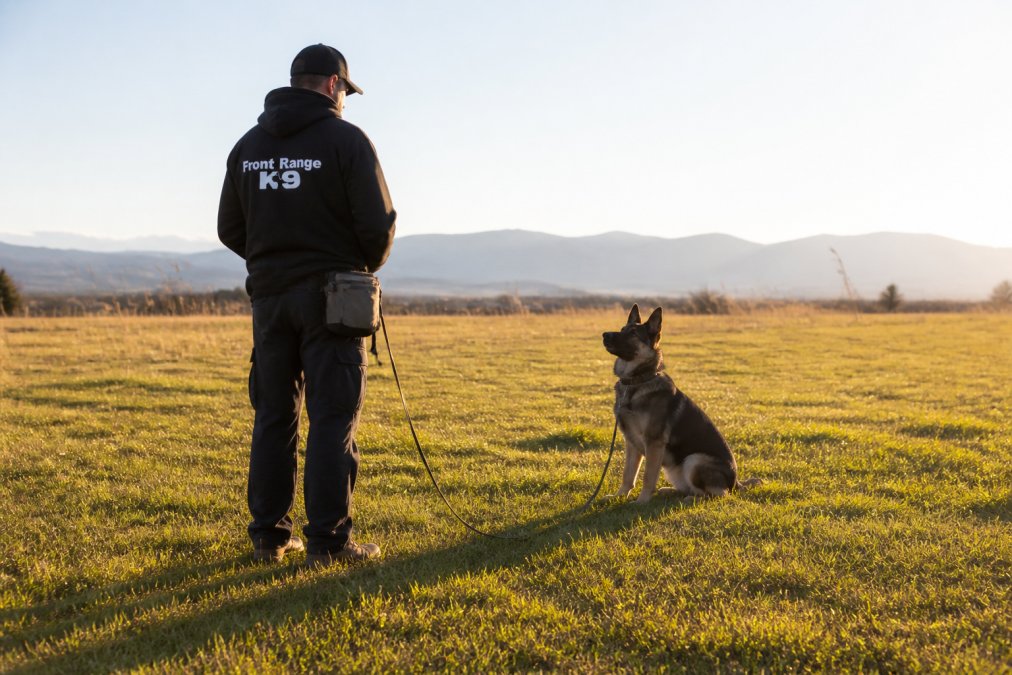
The Dog Obedience Training Timeline: What Realistic Off Leash Training Looks Like
Realistic off leash training requires at least 6 months of consistent work before a dog earns true freedom, according to Sniffspot's 2026 complete guide to off-leash training. The dog obedience training timeline begins with basic impulse control around 4 to 6 months of age, then progresses through structured phases building distance, duration, and distraction tolerance.
The progression follows a predictable arc: foundation obedience, long-line work at 15 to 30 feet, controlled off-leash sessions, and real-world generalization. Industry trends for 2026 increasingly favor at-home training programs, as noted by Alan's K9 Academy's 2026 training trend analysis.
Building Reliable Recall Training and Managing Dog Distractions
Reliable recall training forms the backbone of any off-leash program, and it fails most often because owners train in quiet spaces then expect instant obedience at the park.
A 2026 study observing 247 dogs across nine off-leash zones found that zone features directly shape dog behavior, reinforcing why managing dog distractions requires environmental awareness, according to Taylor & Francis research on off-leash zone design. A command learned in the backyard means nothing at a busy trailhead until systematically practiced there.
Book your Temperament Test & Training Session →
Structured case studies show even reactive dogs can transition to off-leash reliability. The IAABC Foundation Journal's leash reactivity case studies documented three dogs whose reactivity was managed through systematic training, while Hamilton [Dog Training(https://www.frontrangek9noco.com/snake-avoidance)'s reactivity program | hamiltondogtraining.com] successfully moved a rescue dog to dependable off-leash work. In regions where wildlife poses a genuine threat to a roaming dog, pairing recall work with snake avoidance dog training helps ensure a dog's safety response is as reliable as its obedience.
| Training Phase | Typical Duration | Key Focus | Common Mistake |
|---|---|---|---|
| Foundation obedience | 4-8 weeks | Impulse control, handler focus | Rushing to distance before basics are solid |
| Long-line work | 8-12 weeks | Distance control at 15-30 feet | Dropping the line too early |
| Controlled off-leash | 6-8 weeks | Enclosed spaces, low distraction | Expecting instant reliability outdoors |
| Real-world proofing | Ongoing | Distraction training, generalization | Skipping emergency stop commands |
Off leash training for dogs demands patience, structure, and a willingness to build safety before freedom. Front Range K9 Academy has trained more than 10,000 dogs and owners using proven, organized methods delivered through private sessions and small group classes tailored to each dog's age, size, and behavioral history. With over 36 years of experience and membership in the International Association of Canine Professionals, the team builds real-world obedience that holds up under distraction. Book your Temperament Test & Training Session and start your dog on a path to dependable off-leash freedom.
Frequently Asked Questions
Is it really possible to train an older dog to be reliable off leash?
Yes. Age is less important than the dog's temperament and the consistency of the training approach. A structured program that addresses impulse control and obedience works for adolescent and adult dogs alike. The key is a clear dog obedience training timeline that sets realistic expectations, often requiring at least six months of consistent work. A professional can assess your dog's baseline and build a plan that corrects long-standing habits.
What are the prerequisites for starting off leash training?
Before considering off leash work, your dog needs solid basic obedience, including reliable recall, and a baseline of impulse control. A behavioral assessment is critical to determine if your dog is a good candidate. Dogs with high prey drive or reactivity to other dogs need specific management strategies first. Professional trainers use a training progression that starts with long-line work to build safety and reliability before any off leash freedom is granted.
How does professional training improve off leash safety?
Professional trainers focus on more than just commands; they build a safety framework. This includes emergency stop commands and proofing behaviors amid distractions. They also guide owners on legal and local ordinance compliance for off leash areas. With 36+ years of experience and having trained over 10,000 dogs, a professional can teach you the safety protocols that prevent accidents and ensure a positive experience for everyone.