 blog
blog
Best Methods for Potty Training Stubborn Puppies
Table of Contents
- Best Methods for Potty Training Stubborn Puppies
- What to Do If Your Puppy Won't Potty Train
- The 10-10-10 Rule and a Workable Puppy Potty Training Schedule
- Frequently Asked Questions
Last Updated: October 14, 2026
Best Methods for Potty Training Stubborn Puppies
For potty training stubborn puppies, consistency beats intensity: a predictable routine outperforms long sessions. At Front Range K9 Academy, we have spent more than 36 years helping Northern Colorado owners build house-training routines that hold up at home and on walks.
The core problem is rarely stubbornness in the human sense, usually it is unclear signals, too much freedom, or a schedule that changes daily.
What to Do If Your Puppy Won't Potty Train
When a puppy keeps having accidents, the fix is almost always structure, not punishment. Most stalled cases fall into one of four patterns.
1. The schedule problem. The routine shifts on weekends or between family members, so accidents cluster at predictable times.
2. The freedom problem. The puppy has run of the house before the routine has held for several consecutive weeks.
3. The outdoor-aversion problem. The puppy eliminates reliably indoors but stalls outside, often due to noise, weather, unfamiliar surfaces, or a changing spot.
4. The medical problem. Sudden regression, straining, frequent small urinations, blood, discomfort, or excessive drinking all point toward a veterinary assessment, since infections can look exactly like stubbornness.
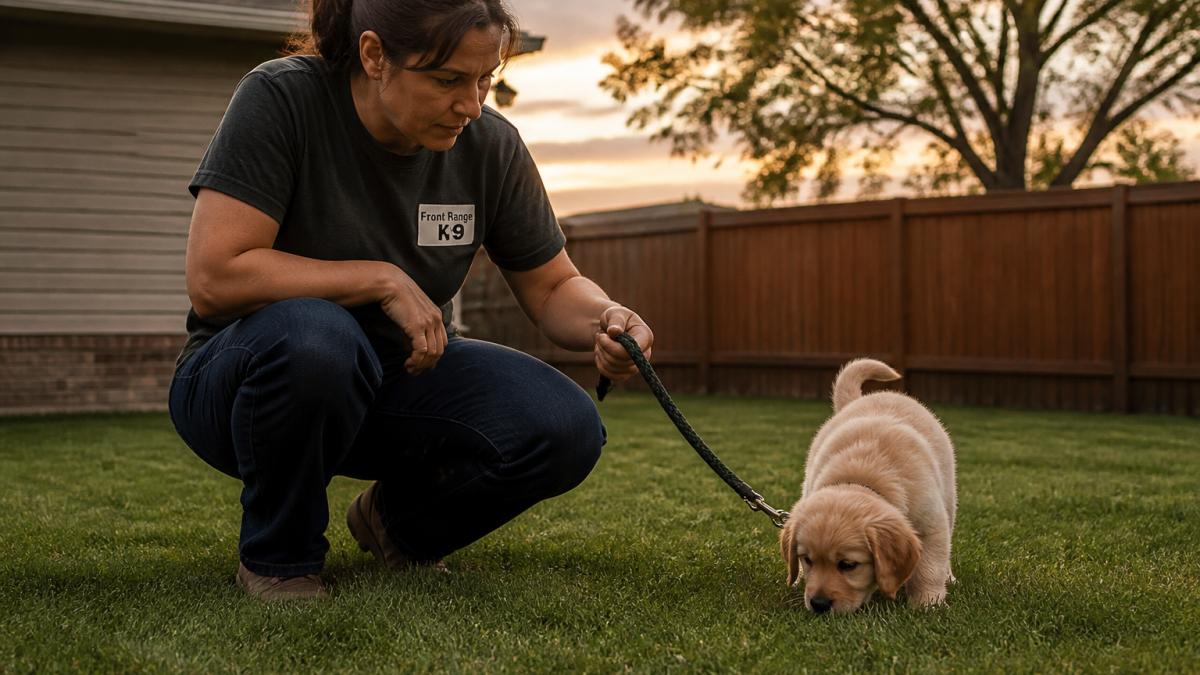
Once you have identified the pattern, the levers that move progress are a fixed schedule, closer supervision, a smaller living area, a single designated potty spot, and immediate cleanup of indoor accidents.
Progress often stalls because the puppy has too much freedom too soon: shrink the world, then expand it as the routine holds.
The 10-10-10 Rule and a Workable Puppy Potty Training Schedule
The 10-10-10 rule structures outdoor trips around a puppy's natural patterns: out 10 minutes after eating, playing, and waking from a nap, tying trips to elimination triggers rather than the clock alone.
Book your Temperament Test & Training Session →
A workable schedule layers that rule on a fixed daily frame: out first thing, after breakfast, at midday, after each nap, after dinner, before bed, plus one or two quiet nighttime trips for young puppies.
Age changes the math
A common rule of thumb is that a puppy can hold its bladder for roughly one hour per month of age, plus one, so a three-month-old manages about four hours at most. Nighttime capacity lags daytime, and a four-month-old cannot last a full workday.
Most puppies need several weeks to a few months of consistent routine before accidents stop.
Track progress instead of guessing
A simple log, date, time out, result, time of any accident, and location, turns a vague sense of "we're not making progress" into a trend line; if it is flat for two or three weeks, revisit the four causes above.
When you cannot get outside quickly
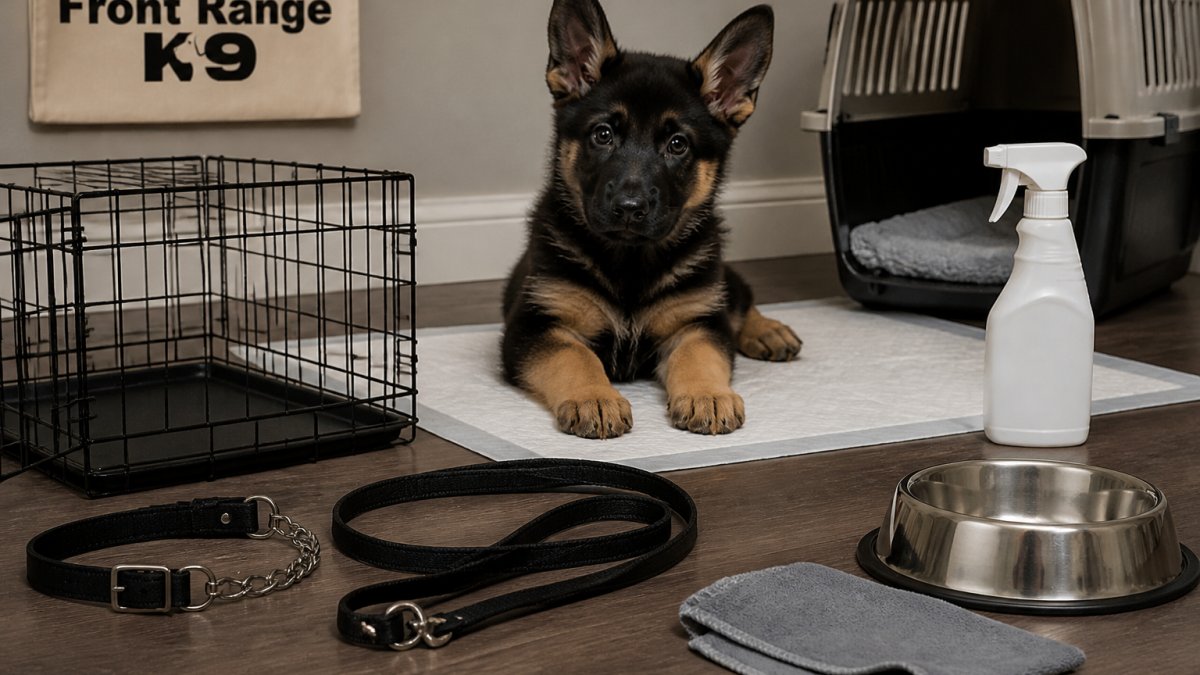
Apartment dwellers, owners in bad weather, and anyone with limited yard access face a version of this problem the standard advice ignores. Keep a leash, bags, and a towel staged by the door, use the same nearby spot every time, and in heavy rain, snow, or extreme heat shorten the trip rather than skipping it.
If your routine is solid but your puppy still struggles out on walks, a structured program such as snake avoidance dog training can help your dog stay safe and focused in the environments where you practice.
Frequently Asked Questions
What is the 10-10-10 rule for puppy potty training?
The 10-10-10 rule is a simple guideline for predicting when a puppy needs to go out: roughly 10 minutes after eating, 10 minutes after drinking, and 10 minutes after waking from a nap. It works because digestion and activity trigger the urge to eliminate. Pair it with a consistent potty training schedule and frequent trips outside, and you cut down on indoor accidents while building a reliable routine.
How long does it take to potty train a puppy?
Most puppies need several weeks to a few months of consistent house training before they are reliable. Smaller breeds and very young puppies often take longer because their bladders are still developing. Progress depends on how consistent the daily schedule is, how often the puppy gets outside, and whether accidents are managed calmly. Stubborn puppies may simply need more repetitions and patience, not a different dog.
When should I seek help from a professional dog trainer?
If you have followed a consistent house-training routine for several weeks and your puppy is still having frequent accidents, or if the behavior is paired with stress, fear, or difficulty settling, it may be time for professional help. A qualified trainer can assess whether the issue is routine, environment, or temperament related. Front Range K9 Academy offers private sessions tailored to individual needs and can build a plan that fits your household.
House training a stubborn puppy comes down to routine, supervision, and timing, not force. If progress keeps stalling, professional guidance can make the difference. Front Range K9 Academy offers private sessions and small group classes built on more than 36 years of experience, with proven methods that work in the real world. Book your Temperament Test & Training Session and start building a routine that lasts.