 how-to
How to House Train a Rescue Dog Step by Step
Table of Contents
- How to House Train a Rescue Dog Step by Step: The First-Week Plan
- House-Training Schedule for an Adult Dog: Timing That Works
- Rescue Dog Peeing in the House: Troubleshooting by Cause
- Frequently Asked Questions
Last Updated: October 12, 2026
How to House Train a Rescue Dog Step by Step: The First-Week Plan
House training a rescue dog step by step works best when you treat the first week as a reset, not a race. At Front Range K9 Academy, we've guided thousands of owners through this transition, and the pattern is always the same: structure beats guesswork. A rescue dog arrives without a known history, so house training a rescue dog step by step needs a plan built around supervision and routine.
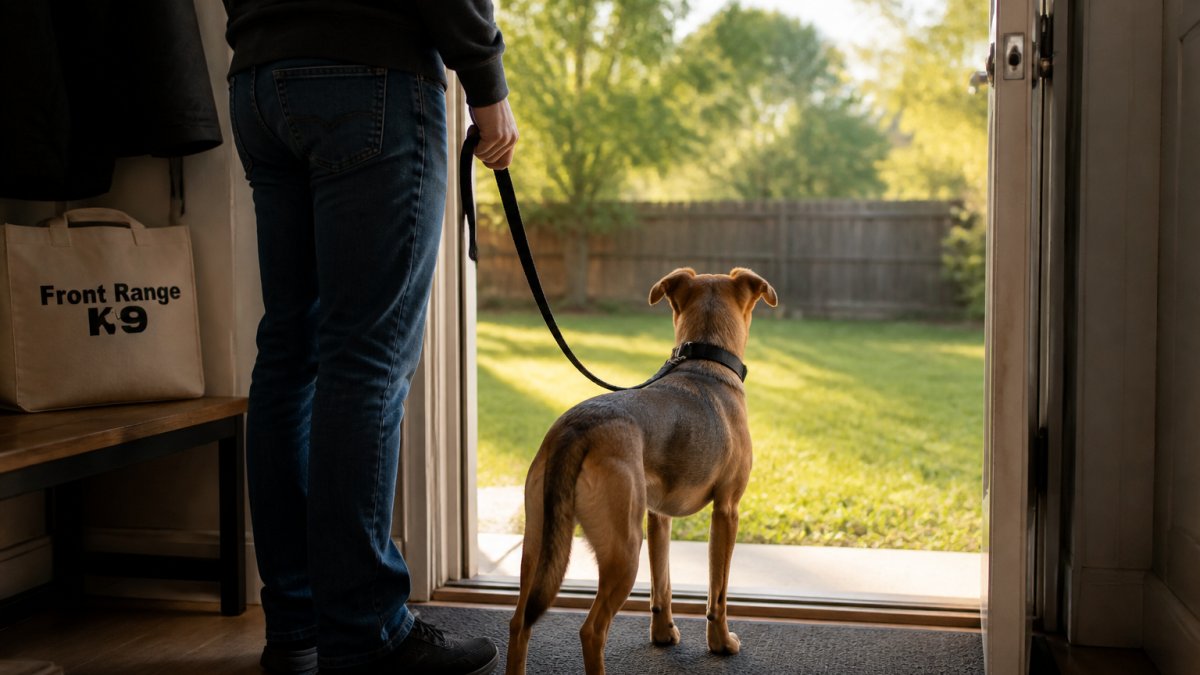
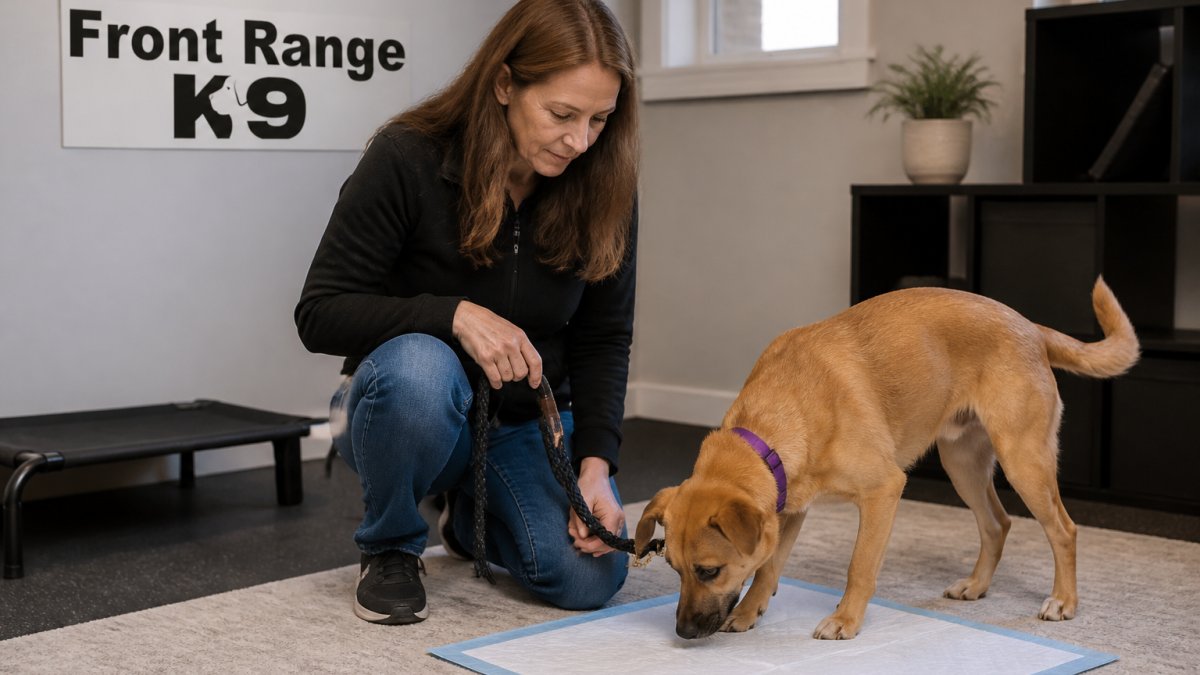
Start with a simple daily rhythm: feed at the same times, take the dog out on a leash to the same spot, and pull the water bowl a couple of hours before bedtime. PAWS re-housetraining guidance for adult dogs recommends a consistent schedule and praise for outdoor elimination, which lines up with what we see in practice.
The first week isn't about teaching a command, it's about building a pattern the dog can predict. Keep the dog leashed indoors or tethered to you for the first day or two, then extend supervised freedom room by room as accidents drop. Expect setbacks: a rescue dog may hold it for hours in a kennel and then eliminate the moment it hits carpet, often surface preference or anxiety, not defiance.
House-Training Schedule for an Adult Dog: Timing That Works
An adult rescue dog usually needs fewer trips outside than a puppy, but timing still matters. Most do well with four to six outings a day at first, with key windows right after waking, 10 to 15 minutes after meals, after naps, and before bed.
| Time of Day | Purpose | Notes |
|---|---|---|
| First thing in the morning | Empty overnight | Go out before feeding |
| 10-15 minutes after each meal | Digestive timing | Same spot every time |
| Before bed | Last chance | Leash walk, not just the yard |
How long it takes to house train a dog varies: some rescue dogs settle within a few weeks, while others, especially those with a rough history, take a few months. Apartment owners should lean on leashed bathroom breaks and a set schedule; a pen or crate helps manage the gaps between trips.
Rescue Dog Peeing in the House: Troubleshooting by Cause
A rescue dog peeing in the house is not always a training gap. Before you assume stubbornness, rule out medical and emotional causes, a veterinary check is the right first step for any sudden change, especially in an older dog, since urinary tract issues and infections can look exactly like a behavior problem.
Once health is cleared, match the accident to its likely cause: submissive or excited urination during greetings, marking, anxiety from new environments or separation, surface preference, or incomplete emptying when the dog gets distracted outside. An enzyme-based cleaner breaks down the scent traces that tell the dog "this is the spot."
Book your Temperament Test & Training Session →
If accidents keep happening despite a solid routine, that's usually the point where professional help pays off. Front Range K9 Academy has spent over 36 years working with dogs of every age and background, and most house-training struggles trace back to a routine problem an experienced eye can spot quickly. We work with owners across Northern Colorado through private sessions and small group classes, and we also offer snake avoidance dog training for dogs that spend time on trails.
Fear and trauma deserve their own note. A dog punished for eliminating indoors may now hide to go, which makes accidents harder to catch, punishment teaches the dog to avoid you, not to change the behavior.
Track your progress and expect a few bad days. A rescue dog's first month is an adjustment period, not a test.
Frequently Asked Questions
How long does it take to house train a rescue dog?
Most rescue dogs need several weeks to a few months of consistent routine before house training holds. Adult dogs with prior indoor habits often settle faster than puppies, but stress from the move can slow early progress. Expect the first two weeks to focus on supervision, frequent outdoor trips, and a steady schedule. Progress is rarely a straight line, so a few accidents during the adjustment period are normal.
Why is my rescue dog peeing in the house even after going outside?
A rescue dog peeing in the house often signals that outdoor trips are too infrequent, the bathroom spot is unclear, or the dog is still anxious in a new home. Some dogs also mark territory or have a medical issue such as a urinary tract infection. Rule out health problems with your veterinarian first, then tighten the schedule and supervise closely indoors.
Can an older rescue dog learn to be house trained?
Yes. Adult and senior dogs can learn new routines when the schedule is predictable and supervision is consistent. Older dogs may need more frequent outdoor trips because of age-related changes, and they often do better with a fixed feeding schedule and a designated bathroom spot. Patience matters more than speed, and steady repetition usually produces reliable results over time.
House training a rescue dog can feel slow when accidents keep happening, and that frustration is normal. If your routine is solid and progress has stalled, the problem is usually something a trained eye can catch in one session. Front Range K9 Academy offers private and group training built on 36+ years of experience and more than 10,000 dogs trained, with methods that hold up in the real world. Book your Temperament Test & Training Session and get a plan built for your dog.