 comparison
K9 Academy vs Local Trainers: Which Fits Your Dog
Table of Contents
- K9 Academy vs Local Trainers: Key Differences
- Professional Dog Trainer Credentials and Experience
- Benefits of Private Dog Training and Program Duration
- Frequently Asked Questions
Last Updated: September 20, 2026
K9 Academy vs Local Trainers: Key Differences
The choice between a K9 academy and a local trainer shapes your dog's learning experience and results.
A K9 academy provides intensive, standardized training in a controlled facility over weeks to months. A local trainer offers private sessions at your home, a park, or their facility on your schedule.
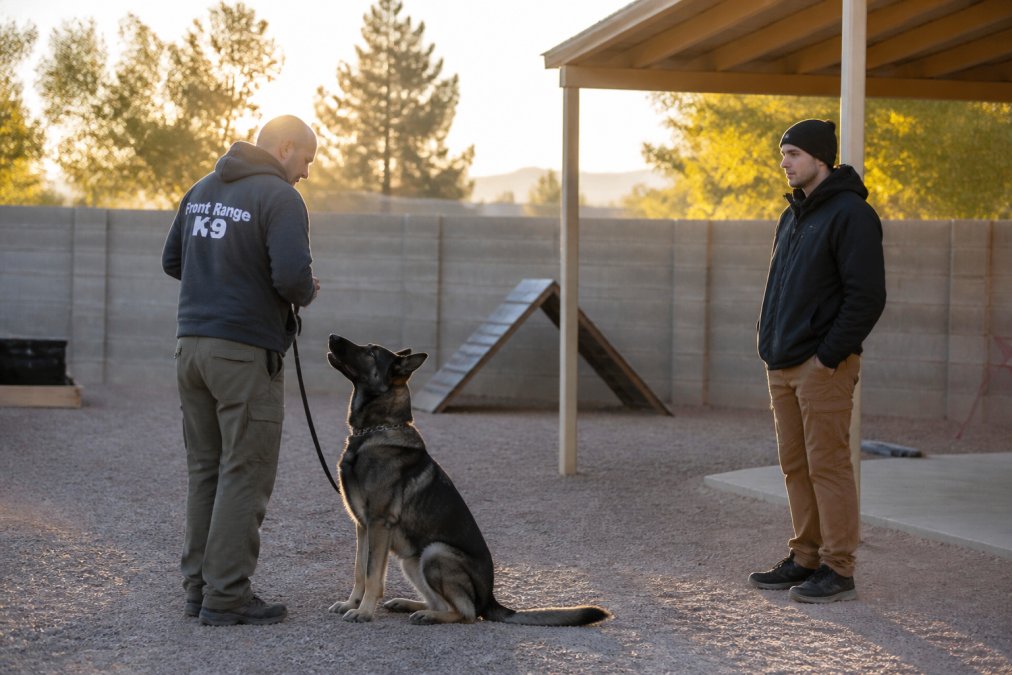
Academy-style training immerses your dog in a controlled environment with consistent daily training and socialization, producing quick results through intensive daily work.
Local training keeps your dog at home while a trainer works with you together, teaching you how to reinforce training between appointments.
| Aspect | K9 Academy | Local Trainer |
|---|---|---|
| Training Intensity | Daily, immersive | Weekly or bi-weekly sessions |
| Handler Involvement | Limited during training | Active throughout process |
| Environment Control | Highly controlled facility | Real-world home setting |
| Timeline | Weeks to months continuous | Ongoing, flexible duration |
| Cost Structure | Upfront program fee | Pay-per-session or package |
| Best For | Severe behavior issues, board-and-train programs | Owner education, lifestyle integration |
Professional Dog Trainer Credentials and Experience
The quality of results depends entirely on the trainer's qualifications, experience, and approach.
Professional credentials matter. Look for trainers who are members of recognized organizations like the International Association of Canine Professionals.
Experience should be specific and verifiable. Ask what types of dogs and behavioral issues the trainer has handled. For example, if you live in an area with wildlife concerns, ask whether they have experience with specialized training like snake avoidance dog training.
Ask what certification entails: hours of training, assessment process, and renewal requirements.
Ask for references and contact previous clients about whether improvements stuck after training and whether the trainer taught maintenance strategies.
Benefits of Private Dog Training and Program Duration
When a trainer works with you and your dog together, you learn the methodology and practice techniques under professional guidance, preventing behavioral relapse after training ends.
Book your Temperament Test & Training Session →
Private sessions adapt to your lifestyle, with training happening in real-world settings like your neighborhood walks.
Program duration varies based on goals and starting point, ranging from weeks to months depending on the dog's age and behavioral needs.
Dogs need reinforcement and consistency to maintain new behaviors. A trainer who builds a transition plan with follow-up sessions produces lasting results.
Ask about post-training support: follow-up sessions, ongoing contact, and refresher packages. These details matter more than the initial training period.
Finding the right trainer means understanding what each approach offers. Choose academy-style training for significant behavioral challenges or intensive structure; choose private sessions if you want deep involvement and real-world training in your environment.
Front Range K9 Academy combines structured training with handler education, ensuring both your dog and you understand how to maintain progress long-term. Book your Temperament Test & Training Session to discuss which training path fits your dog's needs.
Frequently Asked Questions
What are the primary differences between a K9 academy and a local trainer?
K9 academies typically offer structured, standardized training programs with immersion training and facility-based environments, while local trainers often provide private lessons tailored to your specific dog's behavior modification needs. Both can deliver results, but the choice depends on your dog's temperament, your schedule, and whether you prefer intensive immersion training or ongoing private sessions.
How do professional dog trainer credentials affect training outcomes?
Trainers with professional certification from recognized organizations like the International Association of Canine Professionals demonstrate commitment to ongoing education and standardized training methodology. Credentials indicate experience with behavioral assessment, proper training equipment use, and canine psychology. When researching a trainer, verify their professional certification and ask about their experience with your dog's specific behavioral issues. Years of hands-on experience combined with formal credentials typically correlate with stronger training success rates and better handler education.
What should I expect from a dog training program duration and private lessons?
Program duration varies based on your dog's age, behavioral issues, and training intensity. Private lessons allow for customized training plans that address your dog's specific needs, with follow-up support built in. Some dogs benefit from shorter, focused programs, while others with long-standing behavioral patterns may need extended training consistency. Ask potential trainers about their typical timeline, what post-training transition plans they offer, and whether they provide ongoing support after the initial training phase concludes.