 comparison
Professional Dog Training vs DIY Training: Which Fits?
Table of Contents
- Professional Dog Training vs DIY Training: A Side-by-Side Comparison
- Common Dog Behavioral Issues and When to Seek Professional Help
- Benefits of Professional Dog Obedience and Program Duration
- Frequently Asked Questions
Last Updated: September 25, 2026
Professional Dog Training vs DIY Training: A Side-by-Side Comparison
Choosing between professional dog training vs DIY training comes down to how much structure your dog needs. A trainer brings outside eyes, a proven process, and accountability a video playlist cannot replicate.
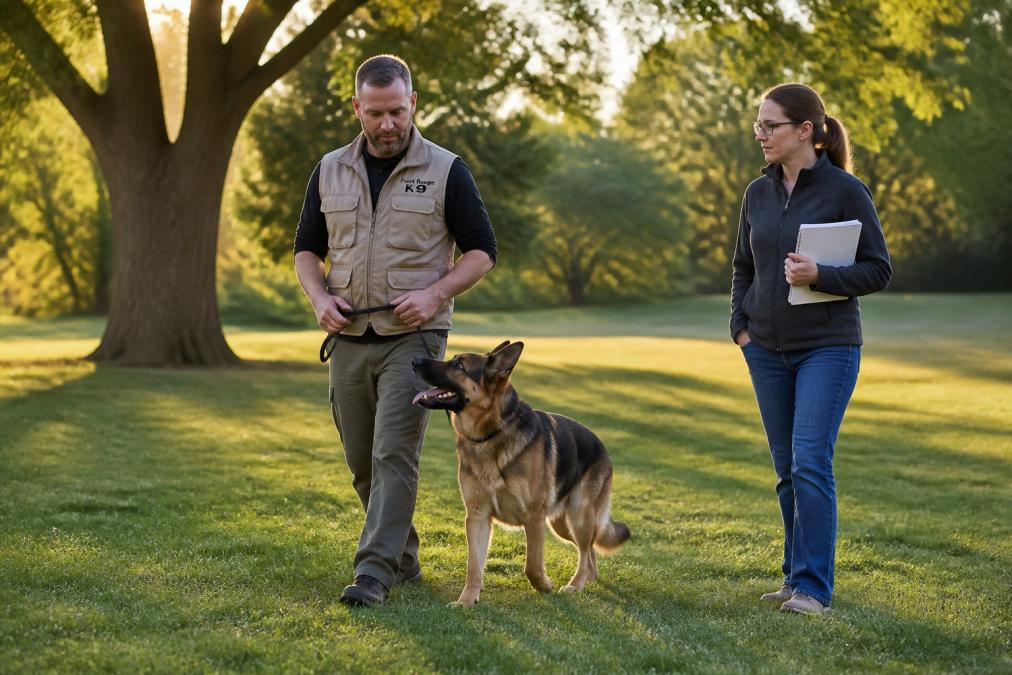
Professional dog training is a structured service: a certified trainer assesses behavior, builds a plan, and coaches the owner through execution. DIY means the owner designs and delivers that plan alone.
| Factor | Professional Training | DIY Training |
|---|---|---|
| Upfront cost | Higher; varies by program | Low to moderate |
| Feedback | Real-time from a trainer | None or delayed |
| Best for | Reactivity, aggression, off-leash goals | Basic manners in easygoing dogs |
The American Veterinary Medical Association's guidance on behavioral health makes a point most comparison articles skip: behavior problems are a welfare issue, not just a convenience issue.
Common Dog Behavioral Issues and When to Seek Professional Help
Seek professional help when a behavior puts anyone at risk, persists for months despite consistent effort, or appears in more than one setting.
Common dog behavioral issues split into nuisance behaviors (leash pulling, jumping, demand barking) and safety behaviors (reactivity, aggression, resource guarding, separation distress). DIY often works for the first group; the second is where DIY stalls and the stakes rise.
Handler skill level is the limiting factor: timing, leash mechanics, and reading stress signals are physical skills you cannot learn from watching someone else.
Breed matters too: a livestock guardian that barks at everything and a herding breed that nips at running children are following instinct, which changes what "fixed" looks like. For the safety and legal side, the CDC's data on dog bite injuries is worth reading before you decide a reactive dog will "grow out of it."
Some safety behaviors are situational rather than general, and those are where specialized programs earn their keep, snake avoidance dog training, for instance, exists because a dog's instinct to investigate a rattlesnake is not something a general obedience plan is designed to override.
Benefits of Professional Dog Obedience and Program Duration
The main benefits of professional dog obedience are a plan built for your dog, real-time correction of your technique, and a defined endpoint. Dog training program duration runs from a few private sessions to several weeks.
Book your Temperament Test & Training Session →
What owners notice first is themselves. Most who come after a year of solo effort are doing something slightly wrong, consistently, and a trainer catches that in the first session.
Training consistency is the other benefit, and the one DIY quietly loses. A structured program sets the schedule; left to their own calendar, most owners train hard for two weeks and then drift.
Group training classes and private instruction serve different purposes: groups add distraction and social exposure for a stable dog, while private sessions let a trainer work a specific problem without an audience.
Our team has trained more than 10,000 dogs and owners, and we are a professional member of the International Association of Canine Professionals. Michael Horner of Johnstown said: "Front Range K9 was much more detailed in their lessons and met us where we were." Brie Benson of Arvada added: "Walks are no longer stressful and in fact, enjoyable!"
If you want to see where your dog sits before committing to anything, the AKC's overview of canine good citizen testing standards gives you a useful benchmark for basic obedience.
Most owners start with DIY because it feels cheaper, then discover the real cost is a year of stalled progress. Front Range K9 Academy offers private sessions and small group classes built around a temperament assessment, so the plan matches your dog instead of a generic script. With 36 years of experience, proven methods that hold up on real streets, and a focus on off-leash freedom and stress-free walks, the academy is built for owners who want results that last. Book your Temperament Test & Training Session with Front Range K9 Academy and find out exactly what your dog needs.
Frequently Asked Questions
Is professional dog training worth the investment?
Professional dog training often saves time and prevents long-term behavioral problems. Trainers provide real-time feedback, customized plans, and accountability that DIY methods lack. For dogs with complex issues like aggression or reactivity, professional guidance is often necessary. Many owners find that the structured approach leads to faster, more reliable results, making it a worthwhile investment for lasting obedience.
What are the limitations of DIY dog training programs?
DIY programs can work for basic obedience, but they often fall short with complex behavioral issues. Without professional feedback, owners may reinforce mistakes or miss signs of stress. Consistency is also harder to maintain alone. Additionally, DIY approaches may not address breed-specific needs or safety concerns, such as off-leash reliability, which require expert assessment and tailored training plans.
How does professional experience impact the speed of behavioral progress?
Experienced trainers assess each dog's temperament and tailor methods accordingly, which accelerates progress. They can identify root causes of behaviors like pulling or barking and adjust techniques in real time. This expertise often shortens the learning curve for both dog and owner, leading to faster, more durable results compared to trial-and-error DIY efforts.