 comparison
KK9 Dog Training vs Competitors: 2026 Comparison
Table of Contents
- KK9 Dog Training vs Competitors: How the Options Compare
- The Benefits of Professional K9 Training for Real-World Behavior
- Evaluating Dog Trainer Experience Before You Commit
- Frequently Asked Questions
Last Updated: September 12, 2026
KK9 Dog Training vs Competitors: How the Options Compare
Choosing between KK9 Dog Training and other programs comes down to format, not philosophy. Many competitors lean toward online curricula, mobile apps, or competition-focused video libraries. At Front Range K9 Academy, we've spent more than 36 years working with dogs of every age, size, and breed.
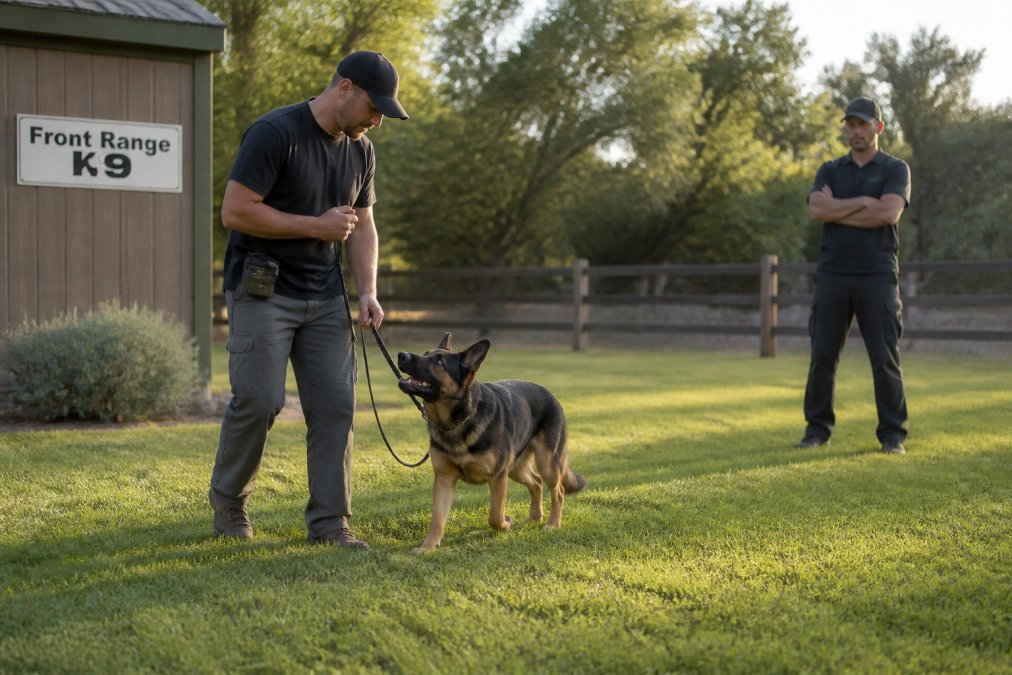
The real question is whether the format matches your dog's actual problem: a puppy needing foundational manners and a reactive adult that lunges are not the same project.
| Option | Format | Best For | Main Limitation |
|---|---|---|---|
| Front Range K9 Academy | In-person private and small group sessions | Real-world obedience and off-leash reliability | Requires scheduled sessions |
| KK9 Dog Training | In-person structured programs | Owners wanting a local, hands-on provider | Limited flexibility on format |
| K9 Training Institute | 10-week online curriculum | Remote learners wanting structure | No real-time physical feedback |
The Benefits of Professional K9 Training for Real-World Behavior
Professional K9 training matters most when the behavior happens outside your living room. A dog that holds a sit in your kitchen but drags you down the sidewalk has learned a cue, not a habit.
Owners consistently report that walks stop being a negotiation, off-leash freedom becomes realistic, and household problems like barking, jumping, and lunging lose their grip. A common mistake is treating training as a phase with an end date; dogs that finish a structured program and then get no reinforcement tend to drift back toward old patterns within months.
Evaluating Dog Trainer Experience Before You Commit
Trainer experience is the easiest thing to verify and the one owners skip most often. Ask for specifics rather than adjectives: how long has the trainer worked with dogs professionally, how many dogs have they handled, and do they belong to a professional association with a published code of conduct? Front Range K9 Academy is a professional member of the International Association of Canine Professionals, and our team has worked with more than 10,000 dogs and owners over 36-plus years.
Book your Temperament Test & Training Session →
Then ask what happens when a dog doesn't improve. Any provider worth your time has an answer involving reassessment, not excuses.
Private dog training sessions vs group classes: which fits?
Private sessions suit dogs with specific problems: reactivity, aggression toward other dogs, or a long-standing habit needing individual attention. Group classes suit dogs that already have basic impulse control and need proofing around distractions.
Frequently Asked Questions
What are the primary differences between professional K9 training and standard obedience?
Professional K9 training goes beyond basic commands like sit and stay. It builds reliability under distraction, impulse control, and off-leash responsiveness that holds up on busy streets and trails. Standard obedience classes often focus on polite behavior in a controlled room. Professional programs address real-world scenarios: lunging at other dogs, bolting through doors, ignoring cues outdoors. The result is a dog that responds consistently whether you are at home, on a walk, or in an unfamiliar environment.
How do I evaluate the experience level of a dog training academy?
Start with verifiable numbers: years in business, total dogs trained, and professional memberships. An academy with 36 years of experience and more than 10,000 dogs trained has a track record you can check. Look for affiliations with organizations like the International Association of Canine Professionals. Ask whether trainers handle complex cases such as reactivity or aggression, not just puppy basics. Request specific examples of behavioral transformations. Experience shows in organized lesson plans, clear communication, and the ability to adapt methods to your dog's temperament.
Is professional K9 training worth it compared to free online videos?
Free videos can teach basic cues, but they cannot watch your dog and adjust in real time. Professional training provides hands-on feedback, structured progression, and accountability. Owners who struggle with pulling, barking, or jumping often find that self-guided attempts stall because timing and consistency are hard to self-correct. A professional program delivers a plan tailored to your dog's drive and temperament, plus a trainer who spots problems before they become habits. The investment pays off in lasting behavior change rather than temporary fixes.