 how-to
Mental Stimulation Games for Senior Dogs
Table of Contents
- Brain Games for Senior Dogs: Why They Matter
- Dog Puzzle Toys for Seniors: Choosing the Right Fit
- Indoor Activities for Older Dogs and How Much Exercise They Need
- Frequently Asked Questions
Last Updated: October 18, 2026
Brain Games for Senior Dogs: Why They Matter
Mental stimulation games for senior dogs ask an older dog to solve a problem, use its nose, or work through a puzzle for a payoff. A senior dog's body slows before its mind does, and when walks get shorter, the brain still needs a job.
An older dog with nothing to do often paces, barks, or follows you room to room, often boredom, not decline. At Front Range K9 Academy, we have spent 36 years watching what happens when dogs of every age get real mental work. Brain games burn energy without stressing joints and fit a senior's stamina.
One small study in the journal Animals described a touchscreen setup built to give dogs mental work. You do not need hardware, a muffin tin and a few treats will do.
Dog Puzzle Toys for Seniors: Choosing the Right Fit
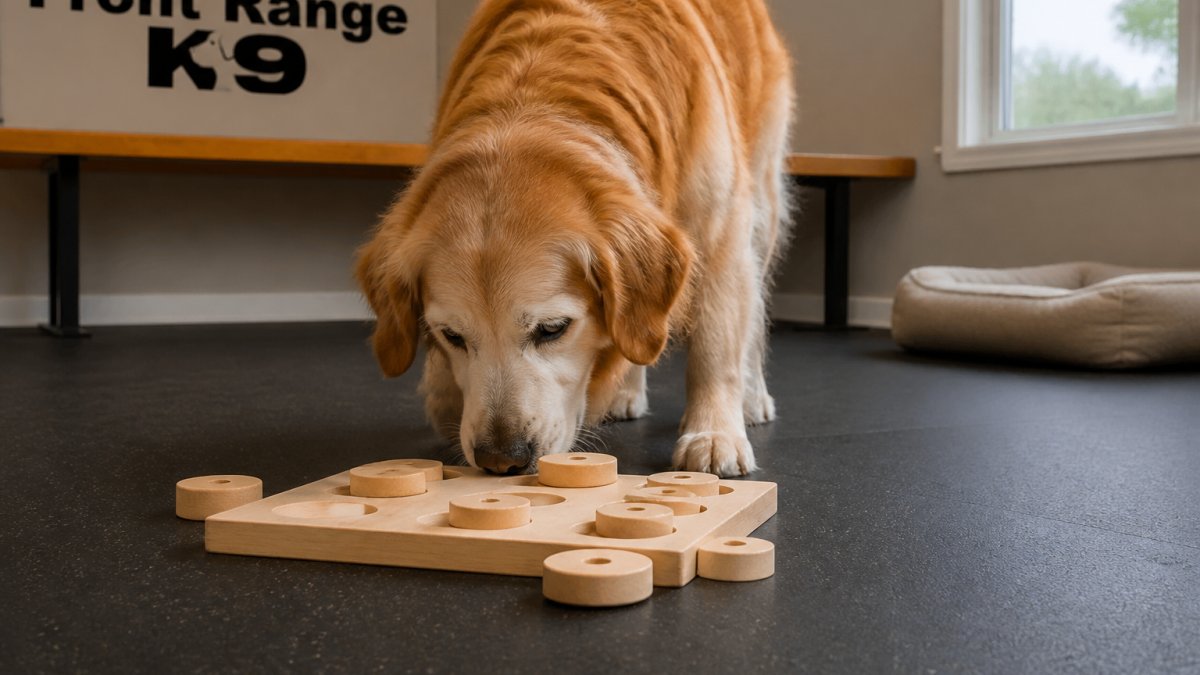
The best puzzle toy for a senior dog is one it can solve without stretching, jumping, or scrambling for balance. Fit comes first, not difficulty.
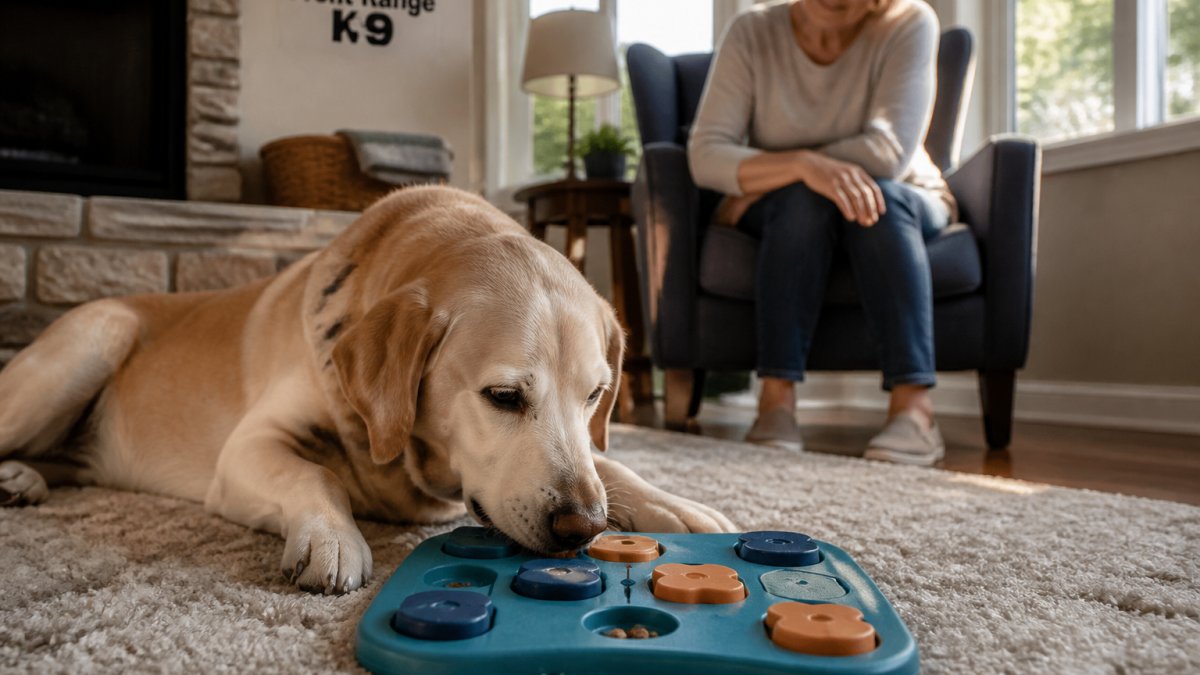
Age-related changes shape the choice: stiff hips do better with a toy worked lying down, fading vision needs high-contrast compartments, and fading hearing needs a clear line of sight. Look for shallow treat wells, a base that stays put, no small loose parts, and a reset under a minute. Start easier than you think, a dog that fails three times in a row will walk away.
Indoor Activities for Older Dogs and How Much Exercise They Need
How much exercise a senior dog needs depends on breed, size, and health, so there is no single number. Keep walks short and frequent, let the dog set the pace, and let your veterinarian set limits for heart, joint, or breathing conditions.
Indoor activities carry the day when weather or stamina keeps you inside: scent games, nose work, hide-and-seek, and new environments add novelty without strain. Keep sessions to five or ten minutes and stop while the dog still wants more; heavy panting, disengaging, next-day stiffness, or turning away are signals to ease off.
Book your Temperament Test & Training Session →
| Day | Activity | Time |
|---|---|---|
| Monday | Scent game in one room | 5-10 min |
| Tuesday | Puzzle toy | 5-10 min |
| Wednesday | Short walk plus easy cues | 10-15 min |
Boredom and pain can look alike. A dog that suddenly loses interest in games it used to love may be hurting, anxious, or showing early cognitive change, a vet conversation, not a training one.
If your senior dog's focus is fading on walks, or old habits like pulling and barking are making outings hard, structured training can help. Front Range K9 Academy works with dogs of any age, and our snake avoidance dog training keeps older dogs safer on trails. Our team has trained more than 10,000 dogs and owners, and we are a professional member of the International Association of Canine Professionals.
Frequently Asked Questions
What are some gentle mental stimulation games for senior dogs?
Gentle options include scent games where your dog finds hidden treats around a room, simple food puzzles that require pawing or nosing, and hide-and-seek with a favorite toy. These games let your older dog use problem-solving skills without jumping or running. Short sessions of five to ten minutes work well. Always supervise and adjust difficulty so your dog stays engaged without getting frustrated.
How much mental stimulation does a senior dog need each day?
Most senior dogs benefit from two to three short enrichment sessions daily, each lasting about five to fifteen minutes. Mental stimulation games for senior dogs should be spaced throughout the day rather than packed into one long session. Watch your dog's energy level and attention span. If your dog loses interest or seems tired, end the session. A consistent daily routine supports healthy aging and quality of life.
How can I tell whether a brain game is suitable for my older dog?
A suitable game keeps your dog curious and engaged without causing stress. Signs it is too demanding include your dog walking away, whining, or giving up quickly. Start with easy dog puzzle toys for seniors and increase difficulty only when your dog solves them confidently. Consider age-related changes like vision or hearing loss. If your dog seems restless at night or unusually disengaged, talk to your veterinarian before adding new activities.
A senior dog that stops getting mental work often starts showing behaviors you would rather not live with. Brain games help, and so does guided training that meets your dog where it is. Front Range K9 Academy offers private sessions and small group classes built around real-world obedience, with 36 years of experience behind every lesson. Book your Temperament Test & Training Session and give your older dog a calmer, more engaged day.