 how-to
Why Is My Dog Digging in the Yard: Common Causes
Table of Contents
- Why Your Dog Is Digging in the Yard
- When Your Dog Suddenly Starts Digging in the Yard
- Dog Digging for Rodents and Other Prey
- Frequently Asked Questions
Last Updated: October 13, 2026
Why Your Dog Is Digging in the Yard
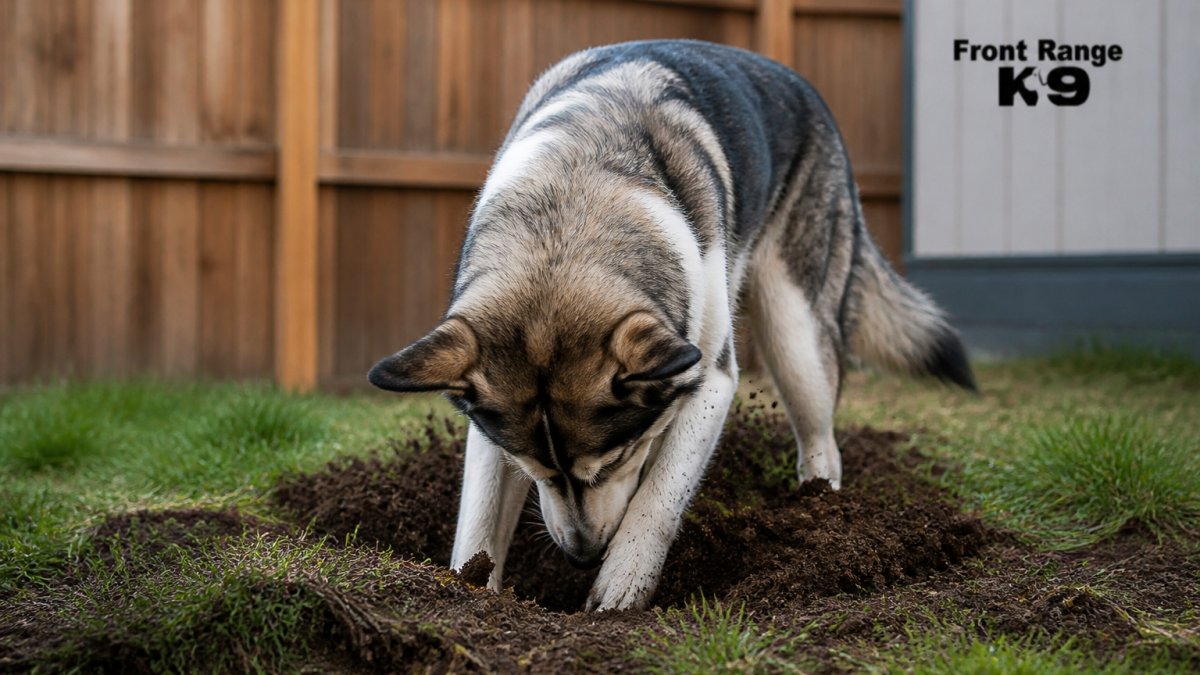
Your dog is digging holes in the yard for a reason. If you're wondering why is my dog digging in the yard, understanding this behavior is the first step toward addressing it.
Digging is a natural instinct hardwired into dogs' genetics. Some breeds, like terriers and dachshunds, have prey drive and hunting instincts that make digging rewarding, but even dogs without those traits dig when bored, anxious, or seeking comfort.
Common reasons include boredom, anxiety, seeking cool ground, hunting prey, burying valued items, escaping the yard, stress, attention-seeking, or compulsive digging that signals a deeper problem.
At Front Range K9 Academy, 36 years of professional training experience has shown us that digging rarely stops on its own. Figuring out why is my dog digging in the yard makes the solution much clearer.
When Your Dog Suddenly Starts Digging in the Yard
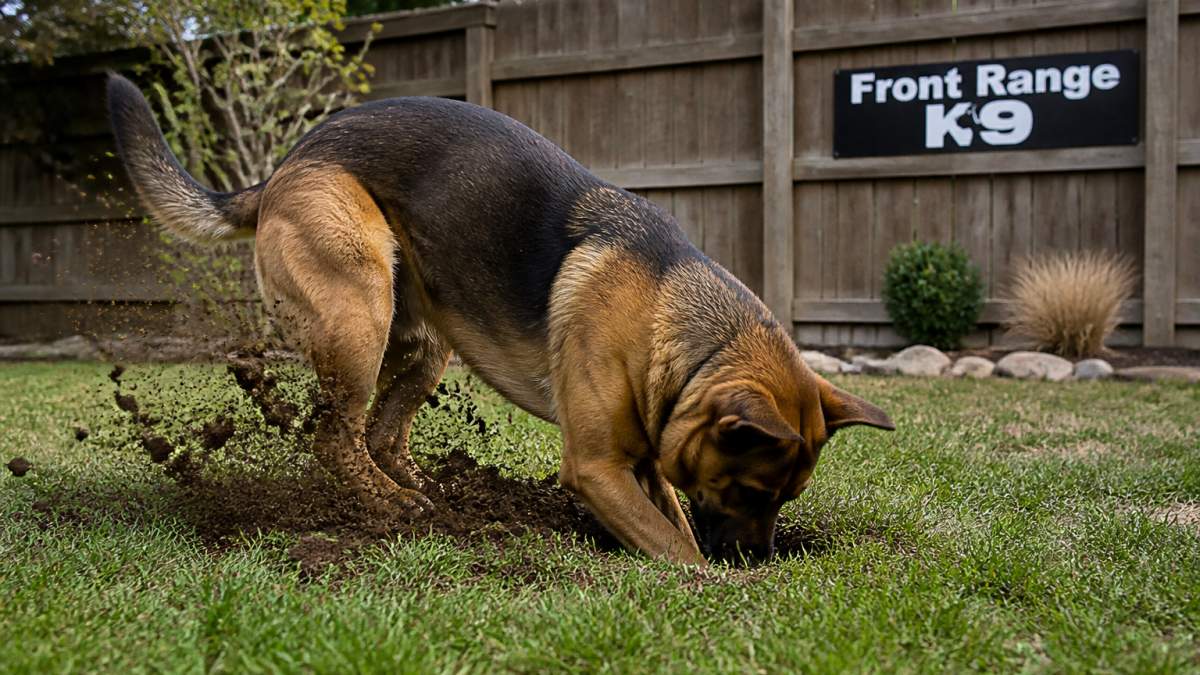
A sudden change in digging behavior often means something has shifted in your dog's world.
Environmental changes, a new pet, a move, a schedule shift, or a new fence, can trigger digging. Stress and anxiety are common culprits; separation anxiety makes some dogs dig frantically to cope.
Health problems can also cause sudden digging. Parasites, skin irritation, or other discomfort may drive it, so a veterinary checkup is worth considering if digging seems obsessive. Heat can also make dogs seek cooler earth.
A new family member, a change in exercise level, or a stressful event can spark digging. Understanding the timing helps pinpoint the cause.
Book your Temperament Test & Training Session →
Dog Digging for Rodents and Other Prey
Many dogs dig because they've detected prey beneath the ground, following natural hunting instinct and prey drive.
Terriers and other hunting breeds have thousands of years of selective breeding behind their prey detection. A dog with strong prey drive digs relentlessly where he's sensed underground movement, not destructiveness, just genetics.
Rodents, moles, voles, and insects attract dogs to dig in specific spots. If your dog digs in the same location repeatedly, there's likely something living there. The digging itself can be dangerous for your dog. Sharp rocks, roots, or contaminated soil pose risks. A dog focused on hunting underground may injure his paws or nose without noticing.
Addressing prey-driven digging requires a different approach than managing boredom or anxiety. Professional training can help redirect that drive into appropriate outlets. The goal isn't to eliminate the instinct, it's to give your dog acceptable ways to express it. For dogs with strong prey drive, specialized programs like snake avoidance dog training teach dogs to recognize and avoid dangerous wildlife, which can also help manage their hunting focus in safer, more controlled ways.
Frequently Asked Questions
Why has my dog suddenly started digging in the yard?
Sudden digging often signals a change in environment, stress, or health. A dog digging to escape yard may be reacting to a new threat or unfamiliar animal. Anxiety from separation, loud noises, or routine changes can trigger sudden digging behavior. If your dog has never dug before, check for parasites, skin irritation, or discomfort that might prompt the behavior. A veterinary checkup rules out medical causes, while professional training assessment can identify behavioral triggers and help address the root cause.
Can boredom or lack of exercise cause a dog to dig?
Yes. Dogs with insufficient physical exercise and mental stimulation often resort to digging as an outlet for pent-up energy. High-energy breeds are especially prone to destructive digging when bored. Enrichment through regular outdoor time, play, and engagement reduces the urge to dig. Professional trainers can design a routine tailored to your dog's energy level and breed traits, ensuring proper exercise and mental challenges that redirect the digging impulse toward appropriate activities.
What dog breeds are more likely to dig?
Terriers, dachshunds, and other hunting breeds have strong prey drive and natural instincts to dig for small animals and insects. Huskies and malamutes dig to create cool dens. Many working and sporting breeds dig when under-stimulated. Breed-related digging is normal behavior rooted in their original purpose, but it can be managed through proper enrichment, supervision, and training that channels their natural instincts in appropriate ways. Understanding your dog's breed traits helps explain the behavior and informs the best management approach.
Ready to address your dog's digging behavior? Front Range K9 Academy specializes in understanding and redirecting unwanted behaviors like digging, excessive barking, and pulling on the leash. Our trainers use proven methods developed over 36 years of professional experience with thousands of dogs. We offer private sessions tailored to your dog's specific needs and personality. Book your Temperament Test and Training Session today to learn how we can help your dog succeed.