 how-to
How to Introduce a New Dog to a Resident Cat
Table of Contents
- How to Introduce a New Dog to a Resident Cat
- Preparing Your Home and Setting Up Safe Spaces
- Dog and Cat Introduction Timeline: What to Expect
- Signs a Cat Is Stressed by a Dog
- Frequently Asked Questions
Last Updated: October 15, 2026
How to Introduce a New Dog to a Resident Cat
Bringing a new dog into a home with an existing cat requires patience and planning. A gradual introduction, separated at first, then slowly building comfort, gives the best chance for a peaceful household.
A structured timeline and attention to stress signals help both pets thrive.
Preparing Your Home and Setting Up Safe Spaces
Before your new dog arrives, create a sanctuary room for your cat with a litter box, food and water bowls, and hiding spots.
Set up a separate area for your dog too, a crate, pen, or gated room, to prevent unsupervised contact early on.
Stock baby gates or barriers in doorways so the pets can see and hear each other without direct contact.
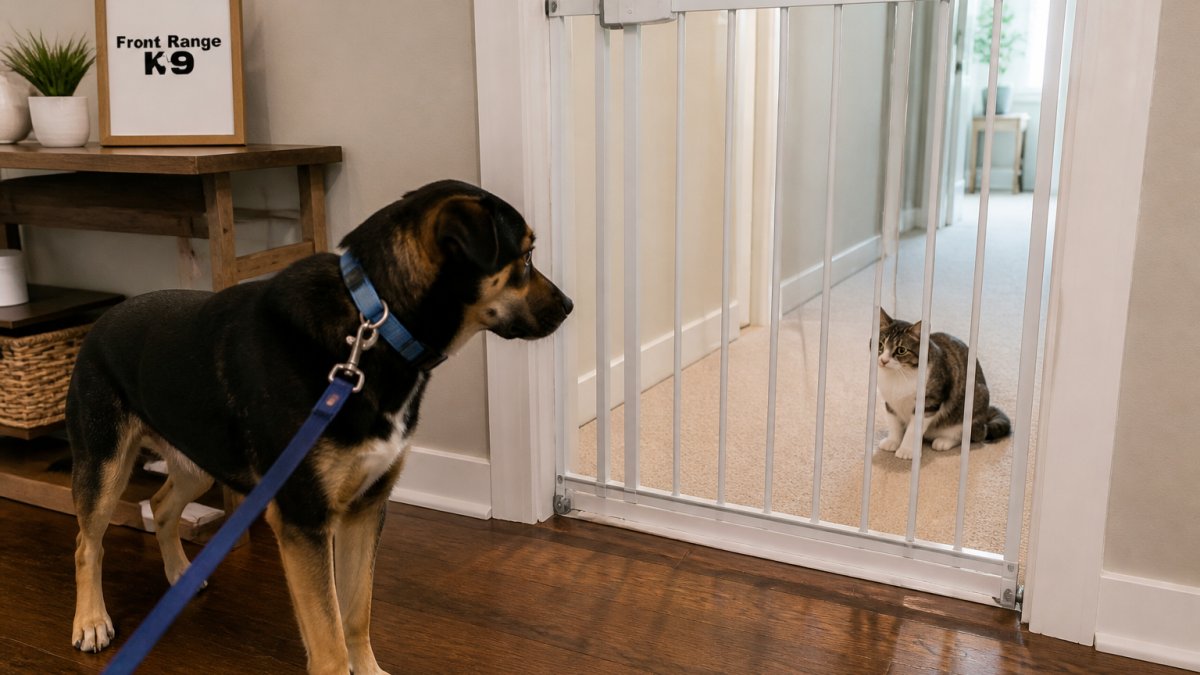
Secure the cat's food and litter box so the dog cannot access them; dogs often investigate or guard these areas, which stresses cats.
Dog and Cat Introduction Timeline: What to Expect
The timeline for how to introduce a new dog to a resident cat varies by temperament. Most introductions take weeks, not days.
Days 1-3: Complete separation. Keep the pets in different areas, letting them smell each other under doors and feeding them on opposite sides of a closed door.
Days 4-7: Scent swapping. Rub a towel on your cat and place it near your dog's bed, and vice versa, to build familiarity.
Week 2: Sound and sight. Let the pets hear each other through a closed door; calm behavior is progress.
Week 3+: Visual contact. Use a baby gate so your new dog and resident cat can see each other, keeping your dog on leash for 5-10 minute sessions that gradually extend.
Book your Temperament Test & Training Session →
Weeks 4+: Supervised time together. Once both animals show relaxed body language, allow brief supervised time in the same room with your dog leashed.
Every pet moves at their own pace; some need months. Rushing creates setbacks.
Signs a Cat Is Stressed by a Dog
Watch your resident cat for stress signals: constant hiding, refusing food, aggression, or hissing and growling.
Other stress signs include:
- Dilated pupils or flattened ears
- Tail puffed up or tucked tightly
- Excessive grooming or hair loss
- Avoiding the areas where the dog spends time
- Litter box accidents outside the box
If your cat shows these signs, slow down and return to separation or scent swapping. A calm, gradual process prevents lasting fear.
Similarly, a dog showing intense focus, stalking movements, or lunging needs more time and structure, kept on leash and redirected when fixating on the cat. If your new dog has a strong prey drive or shows predatory behavior toward your cat, professional training can help redirect those instincts and build impulse control around smaller animals.
Frequently Asked Questions
What is the best way to introduce a new dog to a cat?
Introduce them gradually over days or weeks. Start by keeping them separated with the dog in a safe room, then exchange scents using towels. Allow them to hear each other through a closed door, progress to visual contact through a baby gate with the dog leashed, and finally allow supervised face-to-face meetings. Keep early sessions short and calm, watching for stress signals in both animals. Patience and separation prevent negative first impressions that can damage their relationship.
How long does it take for a cat to get used to a new dog in the house?
The timeline varies by personality, but most introductions take 2-4 weeks for basic comfort and several months for full integration. Some cats adjust in days; others need months. A resident cat's age, temperament, and prior dog exposure affect speed. Your new dog's energy level and prey drive matter too. Never rush the process. Gradual exposure reduces stress and prevents fear or aggression from developing. Watch for calm body language before advancing to the next step.
What signs show that a dog and cat are stressed during an introduction?
Watch for hissing, growling, or excessive hiding in the cat; excessive barking, lunging, or fixation on the cat in the dog. Other stress indicators include a cat's flattened ears, puffed tail, or refusal to eat. A dog showing intense prey drive focus, stiff body posture, or ignoring commands needs more separation time. If either animal shows fear or aggression, back up a step in the introduction process. Calm body language, relaxed posture, normal eating, and curiosity without intensity, signals readiness to progress.
Introducing a new dog to a resident cat takes time and consistency. The payoff is a household where both pets feel safe and can coexist peacefully. If you're bringing home a new dog with behavioral concerns like pulling, jumping, or reactivity, professional guidance can help. At Front Range K9 Academy, we work with dogs of all ages and temperaments to build the skills and confidence they need for success in multi-pet homes. Book your Temperament Test and Training Session to get started.