 comparison
Private vs Group Dog Training: Which Is Right?
Table of Contents
- Private vs Group Dog Training: Key Differences at a Glance
- When Private Dog Training Fits Behavioral Issues
- How Dog Training Session Duration and Cost Compare
- Benefits of Professional Dog Training With a Hybrid Approach
- Frequently Asked Questions
Last Updated: September 6, 2026
Choosing between private and group dog training is one of the most common decisions owners face, and the 2026 market data shows just how evenly split the industry has become. Group classes currently hold 44% of the market while private sessions account for 41%, according to Business Research Insights dog training services market report. At Front Range K9 Academy, we've spent over 36 years helping Northern Colorado owners work through this exact choice, and the honest answer is that neither format wins outright. The right fit depends entirely on your dog's temperament, your training goals, and the specific behaviors you need to correct.
Below, we break down the key differences, examine when private training is non-negotiable, compare costs, and show why the most successful approach combines both methods.
Private vs Group Dog Training: Key Differences at a Glance
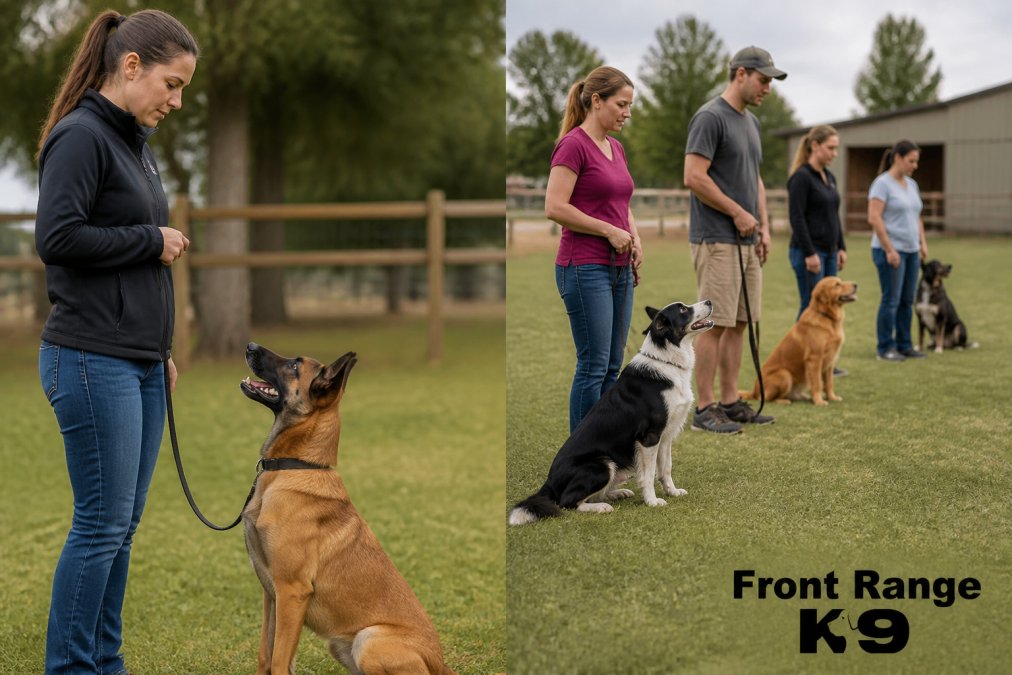
Private dog training is a one-on-one format where a trainer works directly with you and your dog. Group dog training places your dog in a class with other dogs and owners, focused on basic obedience and socialization.
The most significant difference is distraction management and personalization. Private sessions allow a customized plan around your dog's specific triggers, while group classes offer built-in exposure to other dogs and people.
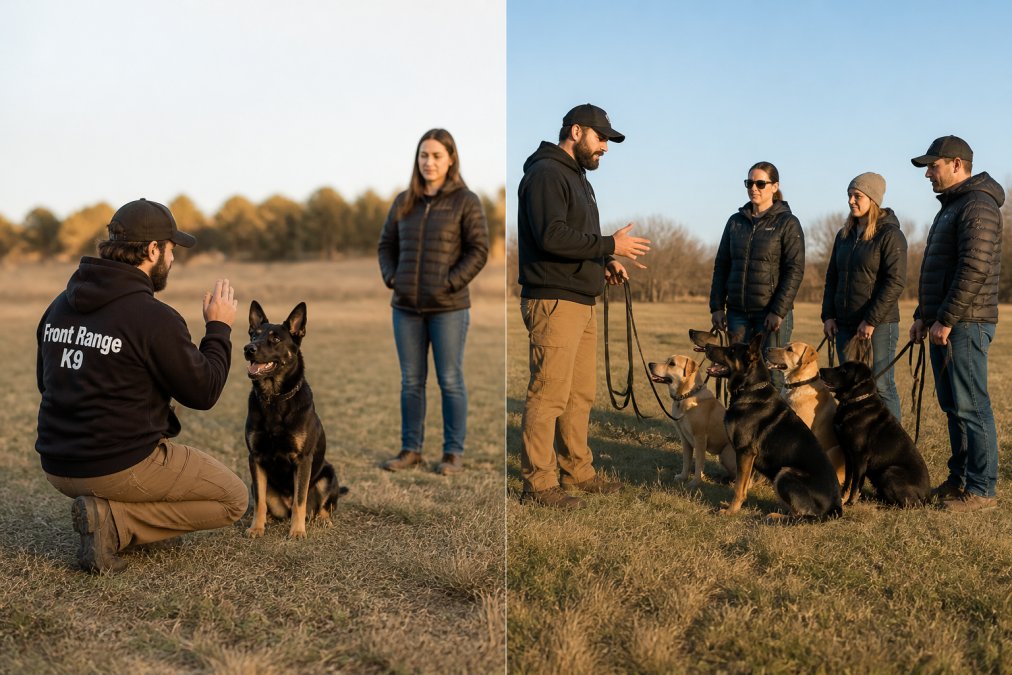
Industry data confirms that most professionals now offer both formats: 74% of trainers manage private and group service models simultaneously, per SchedulingKit dog training statistics. That hybrid availability reflects what trainers see daily: some dogs thrive in groups, while others need the controlled setting of private work first.
| Factor | Private Training | Group Training |
|---|---|---|
| Attention | 100% on your dog | Divided among 6-10 dogs |
| Distractions | Controlled, minimal | High, realistic |
| Customization | Fully personalized curriculum | Standardized curriculum |
| Socialization | Limited | Strong for puppies |
| Behavioral issues | Ideal for reactivity, aggression | Risky for reactive dogs |
| Cost per session | Higher | Lower |
| Best for | Problem behaviors, speed | Budget, socialization |
When Private Dog Training Fits Behavioral Issues
For dogs displaying aggression, strong reactivity, or resource guarding, private training is the safer and more effective choice. Group environments can be overwhelming or counterproductive for dogs not ready for high-distraction settings or social pressure, a concern raised in PuppyTutor's analysis of group training suitability.
Behavioral correction services drive 62% of total demand in the dog training market, per Business Research Insights 2026 market data. A reactive dog in a group class can practice unwanted behaviors, reinforce fear responses, and create safety risks for other dogs. For dogs with specific environmental triggers, such as a strong prey drive toward snakes encountered on Northern Colorado trails, targeted snake avoidance dog training is another example of a specialized behavioral issue best addressed in a controlled, one-on-one setting before generalizing the skill.
As documented in NCBI research on professional dog training methods, professional dog training operates at the intersection of applied behavioral science, ethics, and lived experience. Private sessions give trainers the space to conduct a proper behavioral assessment and address triggers without the complication of other dogs present.
How Dog Training Session Duration and Cost Compare
Private dog training sessions typically run 45 minutes to one hour, with average rates between $100 and $125 per session, according to PuppyTutor's cost analysis for private lessons. A standard five-session private package averages around $500 total.
Group training classes offer a different cost structure. Typical pricing ranges from $300 to $500 for a 4-to-6-week program, making group classes notably more cost-effective on a per-session basis, as reported by Dog Dynamics group versus personal training comparison.
But cost per session only tells part of the story:
- Private sessions: One trainer, one dog, one owner. Every minute is spent on your specific training goals.
- Group classes: One trainer, multiple dogs. Your dog gets a fraction of the trainer's direct attention.
- Private packages: Higher upfront cost but typically fewer sessions needed for behavioral issues.
- Group programs: Lower cost but may require multiple rounds to achieve the same result.
Benefits of Professional Dog Training With a Hybrid Approach
The most effective approach in 2026 combines immersive professional work with group follow-up sessions. Data from Sit Means Sit's 2026 guide to real-world training results indicates a 90% higher success rate for long-term obedience when using this combined method compared to single-format approaches.
Private sessions establish the foundation with full trainer attention. Group sessions then generalize that behavior, teaching your dog to respond reliably amid distractions. Trainers managing dual formats are responding to what produces lasting results.
The benefits of professional training extend beyond obedience. Owners who invest in structured training report stress-free walks, reduced pulling and lunging, and the freedom of off-leash reliability.
For owners in Northern Colorado weighing private vs group training, the strongest recommendation is to start with a professional assessment of your dog's needs. A temperament test identifies whether your dog needs private sessions first, can handle group settings immediately, or benefits most from a hybrid sequence. Front Range K9 Academy offers both private sessions and small group classes tailored to dogs of any age, size, or breed, with over 36 years of experience training more than 10,000 dogs and owners.
Frequently Asked Questions
Is private training more effective for behavioral issues?
For serious behavioral issues like reactivity, aggression, or resource guarding, private dog training is often the safer and more effective choice. A private setting removes distractions and lets a trainer address triggers without the pressure of other dogs present. Group classes can be overwhelming for dogs not ready for high-distraction environments. A professional trainer can assess your dog's specific triggers and build a customized plan to address them, which is difficult to do in a group setting.
Can a dog benefit from both private and group training?
Yes. Many owners see the best results by combining both. Private sessions establish focused obedience and address specific behavioral issues, while group follow-ups help your dog generalize those skills around distractions and other dogs. This hybrid approach can lead to a higher success rate for long-term obedience compared to using a single method. This combination provides the personalized attention needed for skill acquisition and the environmental exposure needed for proofing commands.
How long is a typical dog training session?
A standard private dog training session typically lasts between 45 minutes and one hour. This timeframe allows the trainer to work on specific skills, address owner questions, and set clear homework. Group classes often run longer to accommodate multiple dogs, and are usually structured as a series of weekly meetings over several weeks. The best session duration depends on your dog's attention span, age, and the specific training goals you want to achieve.
Choosing between private and group dog training doesn't have to be a guess. The right format depends on your dog's behavioral history, your training goals, and your budget. Start with a professional assessment to get a clear recommendation, then commit to a program that includes both foundation work and real-world practice. Book your Temperament Test & Training Session with Front Range K9 Academy and get a customized training plan built around your dog's actual needs.