 how-to
Can You Train Old Dogs New Tricks? What to Expect
Table of Contents
- Can You Train Old Dogs New Tricks? What the Evidence Shows
- Can Senior Dogs Learn New Commands and Everyday Behaviors?
- Training an Older Dog With Behavior Problems: What Changes
- How Long Does It Take to Train an Older Dog?
- Why Training Still Matters for a Senior Dog
- What to Expect From Training an Older Dog
- Frequently Asked Questions
Last Updated: October 5, 2026
Can You Train Old Dogs New Tricks? What the Evidence Shows
Yes, you can train old dogs new tricks. Age slows learning but does not stop it, though some movements may be uncomfortable for older dogs. This guide from Front Range K9 Academy covers what changes with age and how to set realistic goals.
Can Senior Dogs Learn New Commands and Everyday Behaviors?
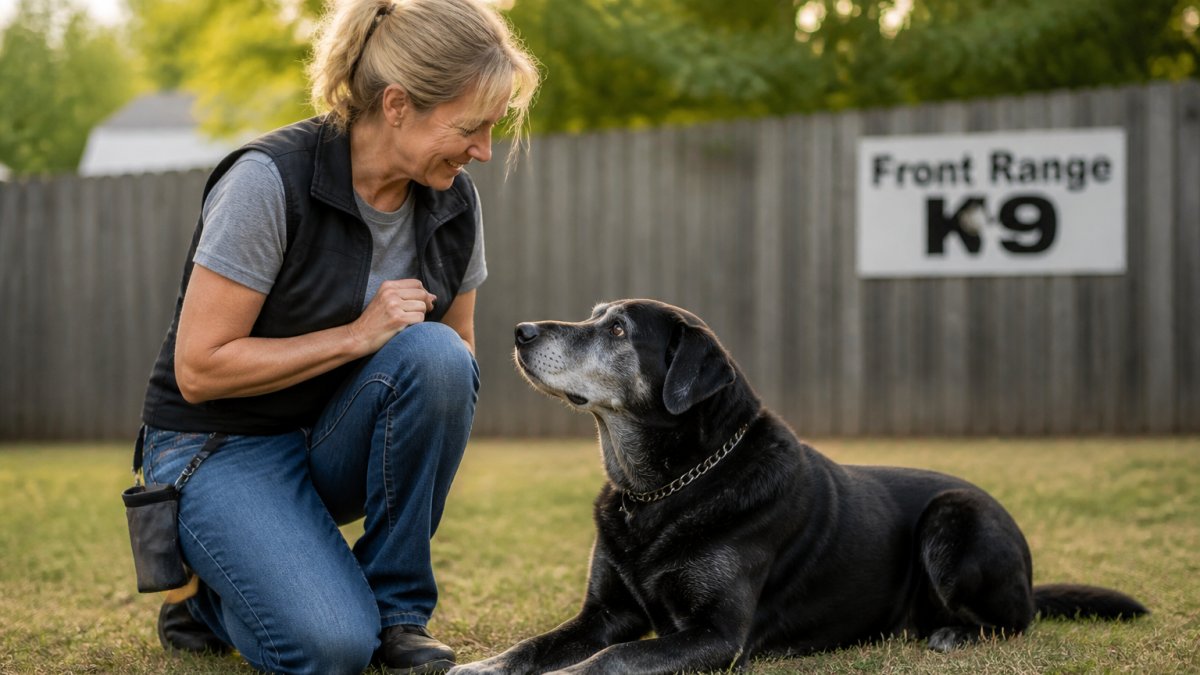
Senior dogs can learn new commands and everyday behaviors. Their bodies and senses may need more consideration, but their ability to form new habits remains.
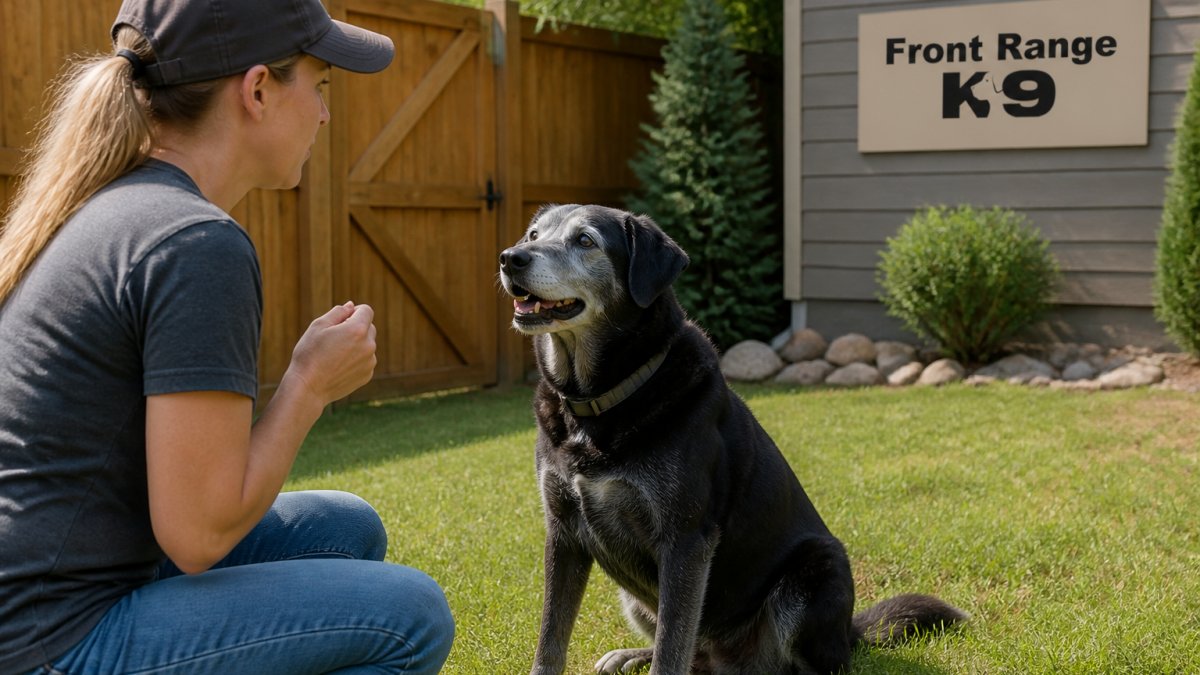
Hearing may fade, vision changes can make a dog hesitant, joint pain can limit movement, and fatigue sets in faster. What stays the same: dogs still want clear information, and consistency beats intensity.
Training an Older Dog With Behavior Problems: What Changes
Training an older dog with behavior problems follows the same rules as training a younger one, with two differences: the habit has had years to set in, and the body has aged. Health comes first: a dog who suddenly barks more, paces, or seems anxious may be reacting to pain, hearing loss, or vision changes rather than a training gap, so a veterinary check belongs at the start of any plan.
| Situation | What to Expect | What Helps |
|---|---|---|
| Long-standing habit (pulling, jumping) | Slower progress than a puppy | Consistency over months, not days |
| New behavior (settling, waiting) | Often quicker than expected | Short, regular sessions |
| Arthritis or joint pain | Some positions are off the table | Low-impact goals, veterinary advice |
How Long Does It Take to Train an Older Dog?
There is no fixed timeline; it depends on the behavior, the dog's health, and how often you practice. Some everyday behaviors come together in a few weeks, while entrenched habits often take months of steady work. Front Range K9 Academy has spent over 36 years helping owners of adult and senior dogs rebuild habits that had years to set in, with private sessions and small group classes built around the dog in front of them.
Why Training Still Matters for a Senior Dog
Training a senior dog is not about performance; it is about daily life. A dog who walks without pulling makes every walk easier, one who settles on command makes visitors easier, and one who responds to a hand signal stays safe when hearing fades. For dogs who spend time on trails or in areas where snakes are present, snake avoidance dog training is another skill worth teaching at any age, and it can be built into a senior dog's plan alongside the everyday behaviors above.
Book your Temperament Test & Training Session →
What to Expect From Training an Older Dog
Expect real change, on a slower clock, with health as the gatekeeper. Older dogs can learn new commands, drop old habits, and pick up useful everyday behaviors; they may not learn as fast as a puppy, and some movements may not suit them, but neither fact changes the outcome. What matters most is a plan that fits the dog: short sessions, clear cues, realistic goals, and a trainer who has worked with senior dogs before. Get those right, and the answer to whether you can train old dogs new tricks stops being a question.
Training a senior dog works best with a plan built around their health, their history, and their pace. Front Range K9 Academy offers private sessions and small group classes for dogs of any age, backed by more than 36 years of professional experience and over 10,000 dogs and owners trained. Our trainers assess each dog individually, address long-standing habits like pulling, barking, and jumping, and build toward street-smart obedience and off-leash freedom. Book your Temperament Test & Training Session and give your older dog a real shot at new habits.
Frequently Asked Questions
Is it actually harder to teach an old dog new tricks?
It is different rather than strictly harder. Age alone does not prevent learning, but some movements, such as sitting, can be uncomfortable for older dogs, according to the Humane Society of Missouri. Senior dogs often learn well when sessions are short, expectations are realistic, and activities are matched to their comfort level. Established habits may take longer to change than brand-new behaviors, so patience and consistency matter more than speed.
Can senior dogs learn new commands if they have never had formal training?
Yes. Senior dogs without prior training can still learn new commands, though they may need more repetition and a quieter environment at first. A professional assessment helps identify health issues, hearing or vision changes, and mobility limits that affect how a dog responds. From there, a trainer can build a plan around the dog's current abilities instead of assuming what it can or cannot do.
How long does it take to train an older dog with long-standing behavior problems?
There is no fixed timeline. How long it takes depends on the specific behavior, how long it has been practiced, the dog's health, and how consistently the owner follows through between sessions. Changing an established habit usually takes longer than teaching a new skill from scratch. A trainer can set realistic milestones after an initial assessment, and progress is best measured in small, steady improvements rather than a single deadline.