 how-to
How to Socialize an Older Rescue Dog: A Calm, Staged Plan
Last Updated: October 23, 2026
Quick Summary
To socialize an older rescue dog, start with a staged plan that begins with decompression: give your dog one safe space, a predictable routine, and low demands before introducing strangers or other dogs. Build up gradually through distance watching, parallel walks, and brief greetings, and stop at any sign of stress.
- A newly adopted dog needs decompression first, with no strangers or new dogs until it eats, sleeps, and relaxes.
- Dog-to-dog introductions work best when brief, calm, and controlled, starting at a distance.
- Most rescue dogs need weeks, not days to settle and socialize well.
- Get a vet check first, since pain and vision or hearing loss can look like fear.
- Call a professional for aggression, intense fear, or no improvement after weeks of steady work.
Table of Contents
- How to Socialize an Older Rescue Dog: Start With a Staged Plan
- How to Socialize an Adult Dog: Settling In, Routine, and Safe Space
- How to Socialize a Rescue Dog With Other Dogs: Gradual, Controlled Introductions
- Socialization Beyond Other Dogs, and When to Call a Pro
- Frequently Asked Questions
How to Socialize an Older Rescue Dog: Start With a Staged Plan
Learning how to socialize an older rescue dog starts with one honest fact: a dog's early weeks shape a lot, but they don't lock the future. A review in Veterinary Medicine: Research and Reports found strong evidence linking poor puppyhood socialization to problem behavior in adult dogs. That finding cuts both ways: it explains why your older rescue dog may struggle, and it tells you the window that was missed, not the one that's closed. At Front Range K9 Academy, we've watched adult dogs change when their owners slow down and build a plan.
How to socialize an older rescue dog is a question of pacing, not perfection.
How to Socialize an Adult Dog: Settling In, Routine, and Safe Space
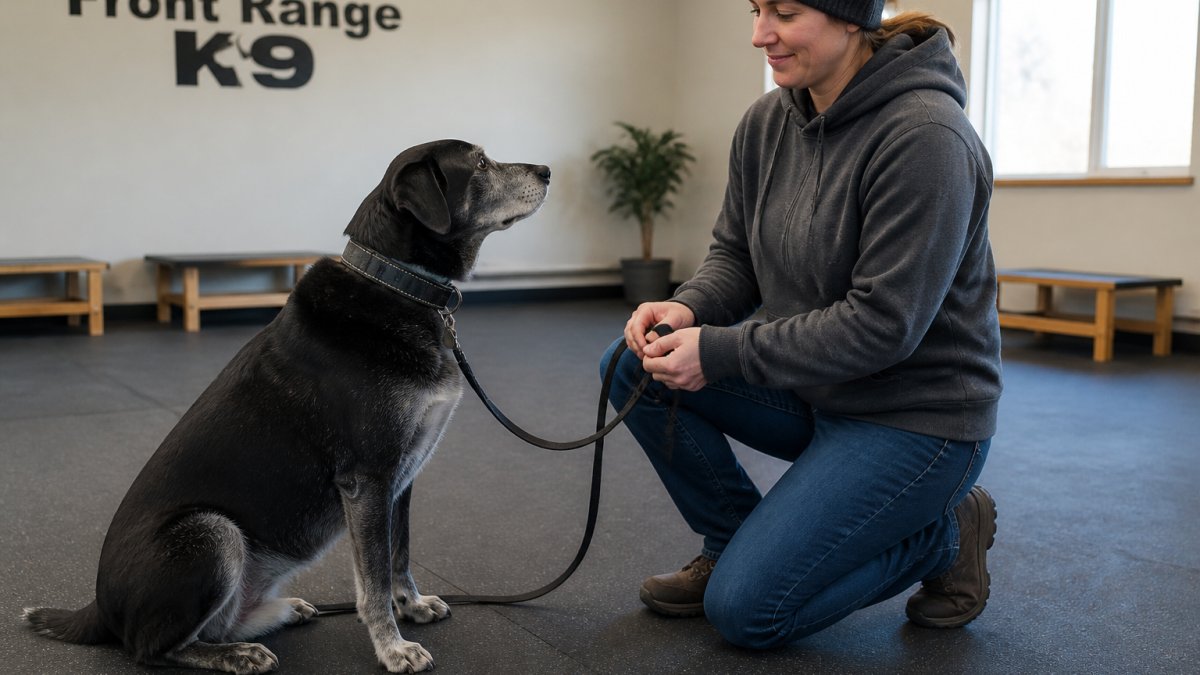
A newly adopted dog needs decompression first, no strangers or new dogs until your dog eats, sleeps, and relaxes in one room. The foundation: one safe space to retreat to undisturbed, a predictable routine, and low demands, few visitors, quiet walks, no crowds in week one. House training often regresses during this stretch; our guide on how to house train a rescue dog step by step covers that. For hands-on support, our team at Front Range K9 Academy can help.
How to Socialize a Rescue Dog With Other Dogs: Gradual, Controlled Introductions
Dog-to-dog introductions work best when brief, calm, and controlled, starting at a distance, watching a calm, friendly dog from across a park.
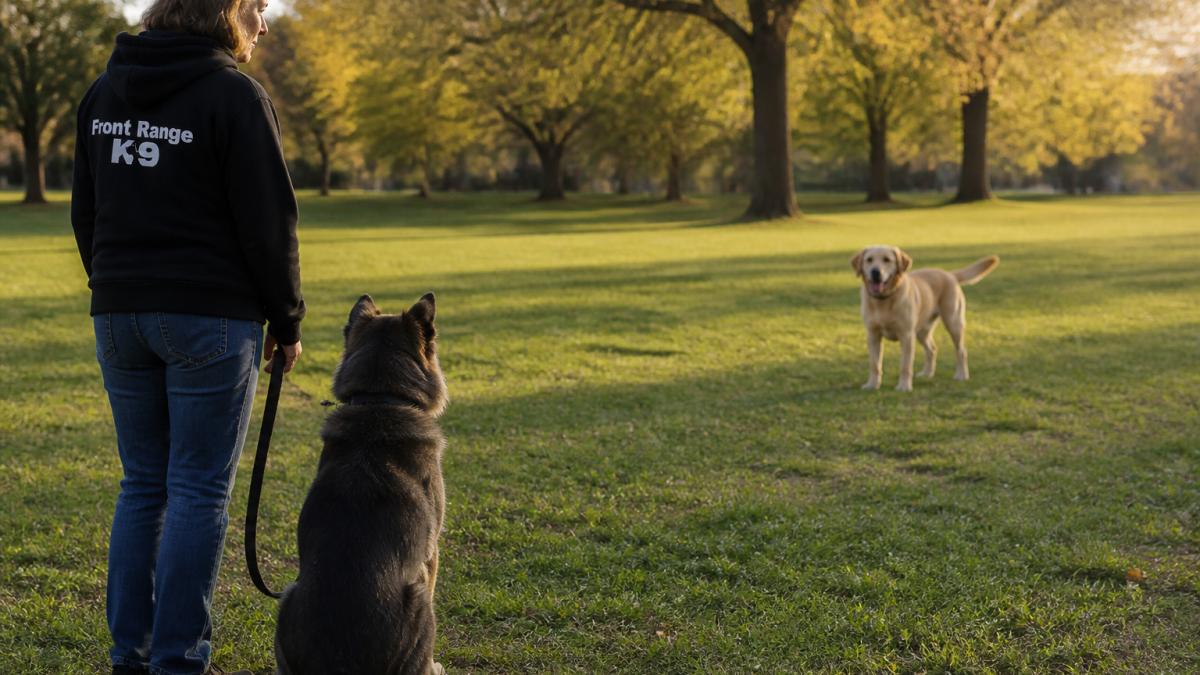
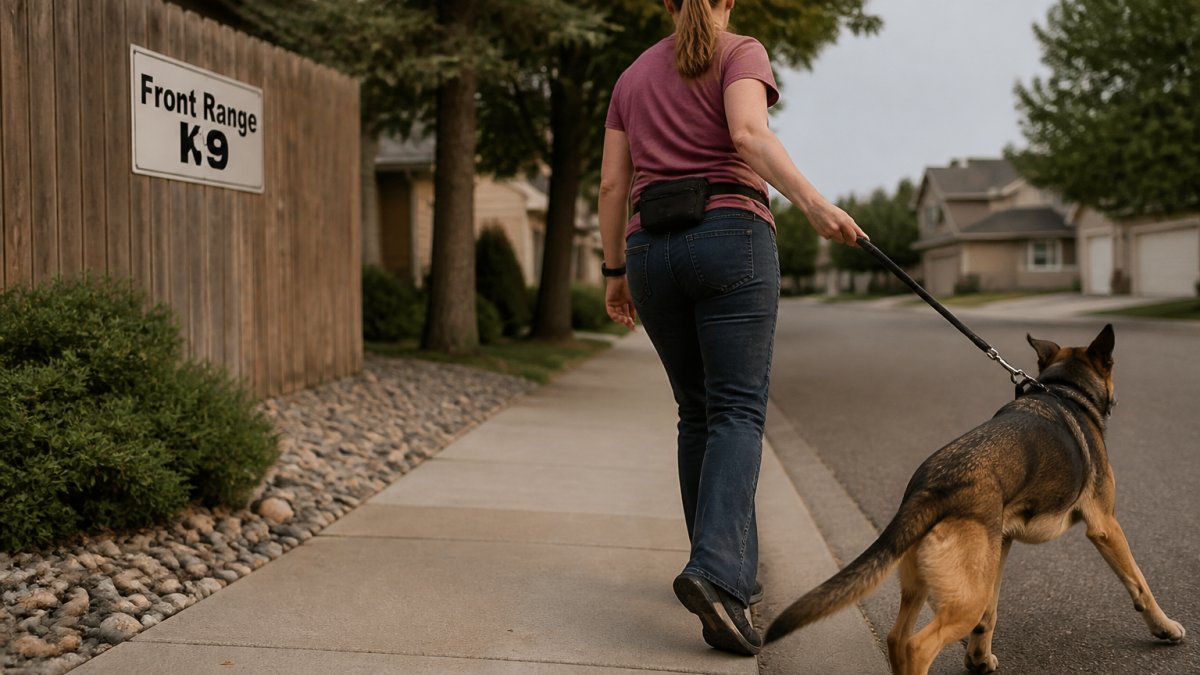
Build up in stages: distance watching, parallel walks with no greeting, then a brief sniff-and-move. A stiff body, tucked tail, lip licking, or hard stare means stop. For reactive dogs, our guide on the best dog training methods for reactivity goes deeper.
Book your Temperament Test & Training Session →
How long does it take a rescue dog to adjust?
Most rescue dogs need weeks, not days to settle and socialize well; progress depends on history, age, and temperament.
Socialization Beyond Other Dogs, and When to Call a Pro
Socialization isn't only about dogs, it's strangers, sounds, surfaces, car rides, and handling. Older dogs also deserve a vet check first: pain and vision or hearing loss can look like fear. If you hike or live near open country, snake avoidance dog training is another piece of real-world preparation worth building into your plan.
Some cases need expert eyes: aggression, intense fear, or no improvement after weeks of steady work. Our professional dog training services are built for dogs of any age, and our article on whether you can train an old dog explains why age is rarely the real obstacle.
| Stage | Focus | Signs of Progress |
|---|---|---|
| Settling in | Safe space, routine | Eats, sleeps, relaxes |
| Distance work | Watching triggers calmly | Recovers quickly |
| Parallel walks | Neutral territory | Loose leash, soft body |
| Brief greetings | Friendly, calm dogs | Sniffs, then disengages |
| Real-world outings | New places, people | Stays calm, checks in |
Frequently Asked Questions
How long does it take an older rescue dog to adjust?
There is no fixed timeline. Many owners follow the 3-3-3 rule as a rough guide: about three days to decompress, three weeks to settle into routine, and three months to feel at home. Older rescue dogs may take longer because their habits and history run deeper. Progress is usually gradual, so track small wins in calm behavior rather than expecting a sudden change.
Can an older rescue dog learn to feel comfortable around other dogs?
Often, yes, with gradual exposure and positive experiences. A 2015 review in Veterinary Medicine: Research and Reports linked inadequate puppyhood socialization with undesirable adult behavior, but that does not mean older dogs cannot improve. Go slowly, choose calm and friendly dogs for early interactions, keep encounters brief, and watch body language for stress signals. Some dogs improve steadily; others need professional help.
When should you seek professional help for a fearful or reactive rescue dog?
Seek help when your dog shows fear, anxiety, or reactivity that does not ease with gradual, controlled exposure, or when stress signals appear at everyday distances. A veterinary check first rules out pain-related causes, since discomfort can look like behavior problems. Then a qualified trainer can build a staged plan with measurable progress. Front Range K9 Academy offers private sessions and a temperament test to assess where to start.
Older rescue dogs can absolutely learn to feel safer around people and other dogs. The work takes patience, a staged plan, and someone who knows when to push and when to pause. Front Range K9 Academy has helped more than 10,000 dogs and owners, and our trainers build plans around each dog's temperament, not a one-size script. Book your Temperament Test & Training Session and give your rescue dog the calm, confident life it deserves.