 how-to
Are You Practicing Obedience Skills Often Enough?
Last Updated: October 25, 2026
Quick Summary
For most adult dogs, ten to fifteen minutes of practice three to five times a week keeps obedience skills sharp. Short daily sessions beat occasional long ones, and frequency and cue consistency drive results more than volume. Same words and same expectations from every person in the house turn a trained behavior into a habit.
- Practice ten to fifteen minutes three to five times a week to keep obedience skills sharp.
- Structured classes improved obedience behavior in dogs of any age, per an Animal Science Journal study.
- Sit, down, stay, and come decay fastest and deserve a weekly refresher.
- Score each command monthly to track reliability indoors, near people, and in new places.
- Front Range K9 Academy has trained over 10,000 dogs and owners in more than 36 years.
Table of Contents
- How Often to Practice Dog Training to Keep Obedience Skills Sharp
- Dog Obedience Training Commands That Deserve a Regular Refresher
- Dog Training Consistency: Why It Decides Whether Skills Stick
- Generalizing Obedience Across Real-World Distractions
- Fading Treats Without Losing Motivation
- Measuring Reliability and Troubleshooting Regression
- When to Bring In a Professional Trainer
- Frequently Asked Questions
How Often to Practice Dog Training to Keep Obedience Skills Sharp
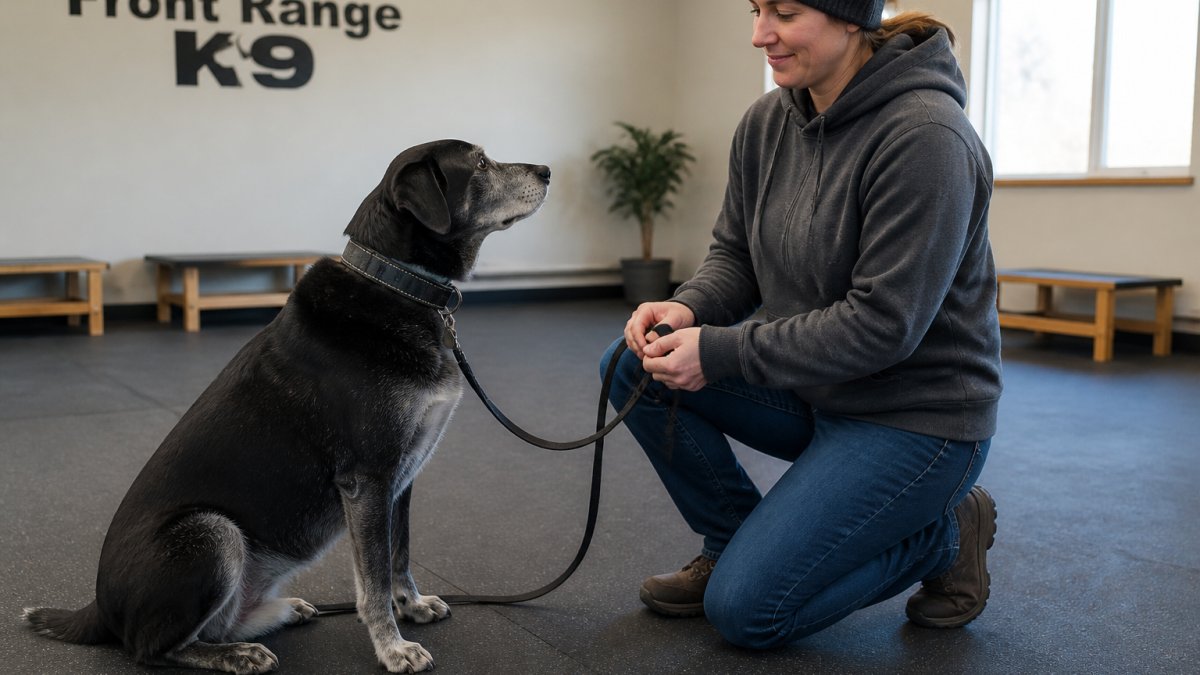
Short daily sessions beat occasional long ones. For most adult dogs, ten to fifteen minutes of practice three to five times a week keeps obedience skills sharp, and this guide from Front Range K9 Academy shows how to build that routine around a real life. A study in the Animal Science Journal found that dogs who went through structured classes showed better obedience behavior, and the effect held regardless of the dog's age.
Obedience skills are the trained responses a dog gives to spoken cues and hand signals, and they fade without use.
| Day | Focus | Time |
|---|---|---|
| Monday | Sit, down, stay in a quiet room | 10 min |
| Wednesday | Come and recall on a long line | 10 min |
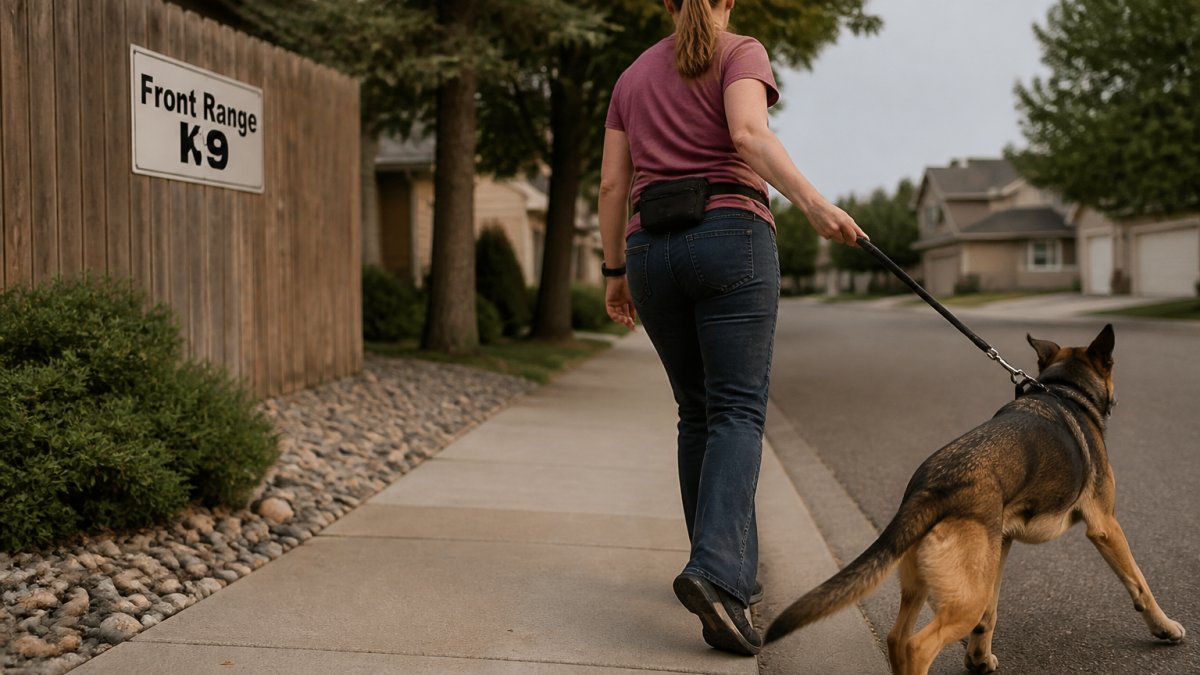
| Friday | Loose-leash walking on the block | 15 min |
Frequency and cue consistency drive results more than volume. Owners wondering whether an adult dog can still learn can read can you train an adult dog, and those ready to push further can explore advanced obedience training.
Dog Obedience Training Commands That Deserve a Regular Refresher
Sit, down, stay, and come decay fastest and matter most. Add loose-leash walking and a solid recall, and you have the core dog obedience training commands worth refreshing weekly. When a command stops working, the cue has usually gotten muddy; why your dog won't listen to commands walks through the causes.
Dog Training Consistency: Why It Decides Whether Skills Stick
Consistency is the single biggest factor in whether obedience holds up. Same words, same expectations, every person in the house. Dog training consistency turns a trained behavior into a habit.
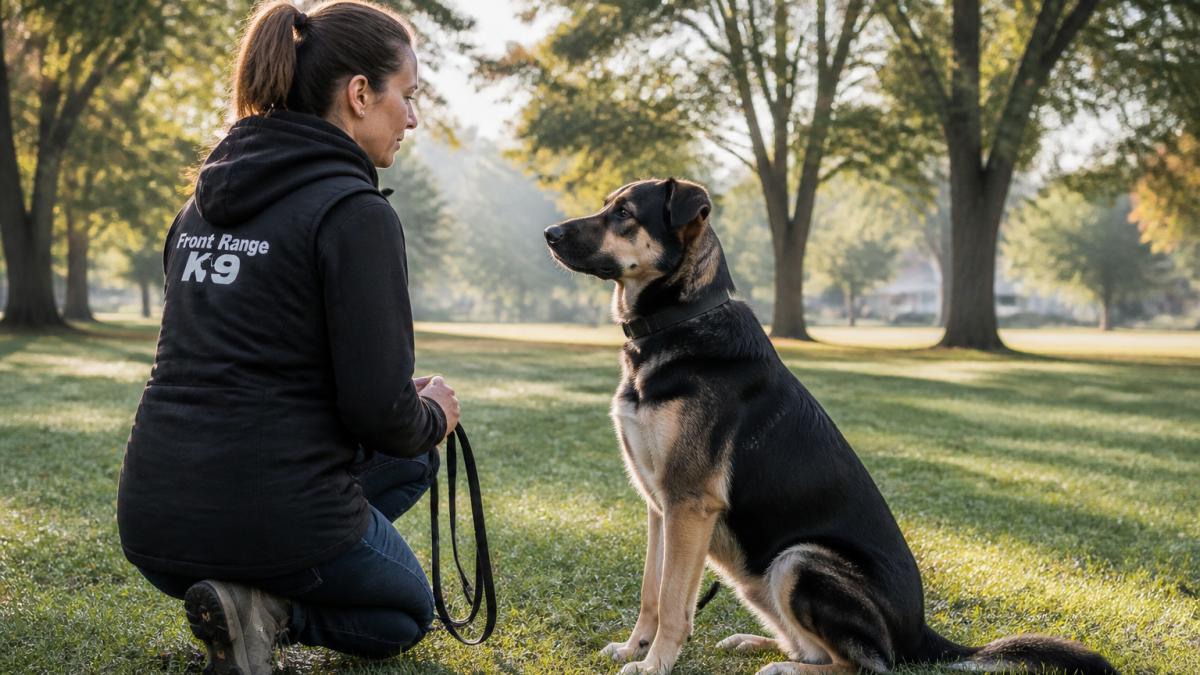
Routines fall apart when one person allows jumping up and another does not, when cue words drift, or when practice stops the moment the dog looks good. The common dog training mistakes that erode skills are almost always consistency problems, not ability problems. If your routine needs structure, see the training programs at Front Range K9 Academy.
Book your Temperament Test & Training Session →
Generalizing Obedience Across Real-World Distractions
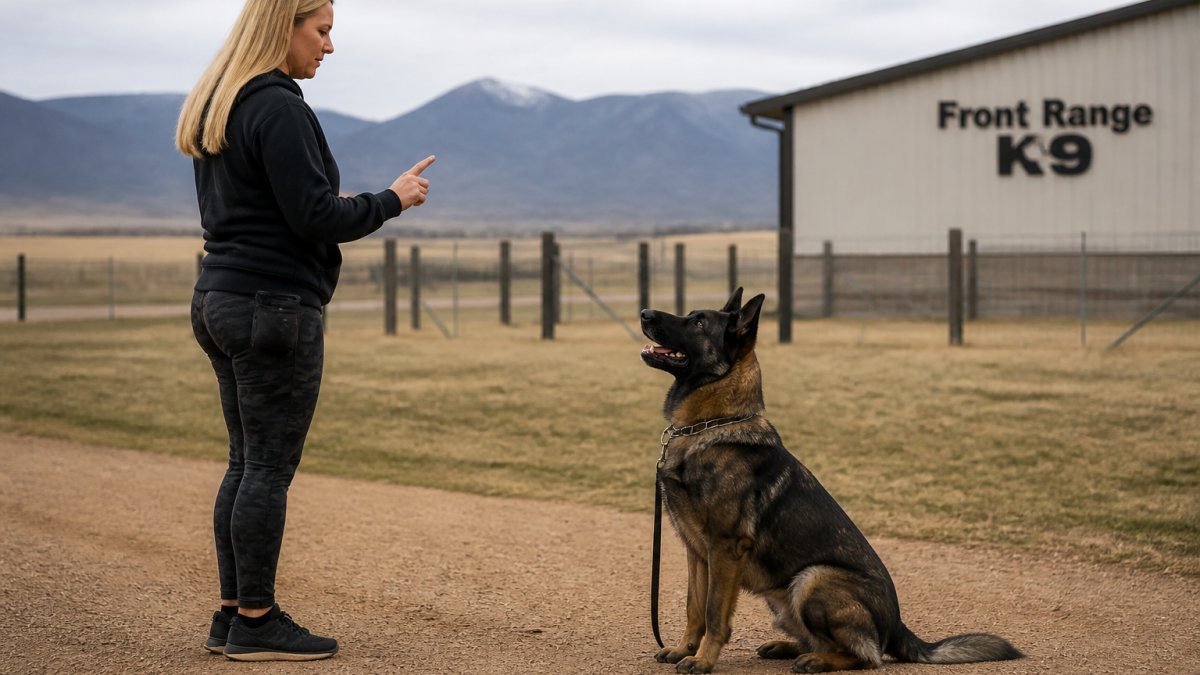
A dog that sits perfectly in the living room may act like it has never heard the word at the park. Skills learned in one place do not automatically transfer, so practice has to travel with you. For dogs that spend time on trails or in open country, snake avoidance dog training is another skill worth maintaining, since a reliable response around wildlife is built and kept the same way as any other obedience behavior.
Fading Treats Without Losing Motivation
Treats are a great teaching tool, not a permanent contract. Motivation comes from variety and surprise, not a fixed schedule. A 2025 study in the journal Animals looked at whether play after training improved test scores and found it did not boost outcomes, with the authors noting more research is needed.
Measuring Reliability and Troubleshooting Regression
Reliability is a number you can track. Score each command monthly: does the dog respond on the first cue indoors, hold with people nearby, and work in a new place? If a skill regresses, drop back one level of difficulty for a week. Senior dogs and dogs with physical limits may need shorter sessions.
When to Bring In a Professional Trainer
Some problems outgrow a home routine. If a dog shows reactivity, guarding, or aggression, or months of practice produce no change, professional help is the faster, safer route. Front Range K9 Academy has worked with dogs of every age, size, and breed for more than 36 years and trained over 10,000 dogs and owners. Our private sessions and small group classes are built around real-world obedience. One client put it simply: "Walks are no longer stressful and in fact, enjoyable!"
Frequently Asked Questions
How often should adult dogs practice obedience skills?
Short sessions several times a week keep obedience skills sharp, and daily practice works best for commands that are fading. A practical routine mixes brief at-home reps with real-world outings, so the dog practices around distractions, not just in the living room. Consistency matters more than session length; a few focused minutes repeated across the week beats one long session. Owners who travel or work long hours can still maintain skills with two or three planned practices weekly plus everyday reinforcement on walks.
Why does my adult dog stop responding to familiar commands?
Adult dogs often stop responding because practice has lapsed, the environment has become more distracting, or the reward has lost value. A dog that performs a perfect sit in the kitchen may ignore the same verbal cue at a busy park. Rebuilding response usually means going back to easier settings, shortening sessions, and raising motivation again. If a dog was reliable for months and then regresses suddenly, a professional assessment can rule out pain, stress, or a training gap before the habit hardens.
When should I consider professional help with my dog's obedience?
Professional help makes sense when skills keep regressing despite regular practice, when a dog ignores cues around other dogs or people, or when safety is at stake on walks. It also helps owners who feel stuck after trying videos and treats at home without lasting results. An experienced trainer can assess the dog's temperament, identify gaps in dog training consistency, and build a maintenance plan. Front Range K9 Academy offers private sessions and small group classes for dogs of any age, size, or breed.
Keeping an adult dog sharp takes less time than most owners expect, but it does take a plan. If your practice routine keeps stalling, or your dog needs help with pulling, barking, or jumping, Front Range K9 Academy can build a program around your dog. Our trainers bring 36+ years of experience, private and group sessions, and methods that hold up on real walks. Get started with Front Range K9 Academy and book your Temperament Test & Training Session.